Editor's brief
This article explores the Multiverse Theory, examining how inflationary cosmology, quantum mechanics, and higher dimensions suggest our universe is part of a vast, infinite structure. It highlights how these frameworks explain physical fine-tuning and the potential existence of parallel realities beyond our observable horizon.
#Multiverse Theory
#Quantum Mechanics
#Cosmology
#Theoretical Physics
Introduction: Beyond the Observable Horizon For centuries, humanity has observed the night sky under the assumption that our observable universe represents the sum total of existence. However, modern theoretical physics and cosmology have begun to challenge this anthropocentric perspective. The Multiverse Theory suggests that our universe may be merely one bubble in an expansive landscape of realities, shifting the paradigm of our place in the cosmos from a singular event to a localized manifestation within an infinite structure [1]. The Conceptual Foundations: From Inflation to Fine-Tuning The transition from philosophical speculation to mathematical framework has been driven by our understanding of the early universe. The inflationary model proposes that shortly after the Big Bang, space underwent exponential expansion. If this process did not terminate simultaneously everywhere, it would create isolated "bubble" universes, forever separated by regions of space-time expanding faster than light [2]. This framework provides a compelling explanation for the fine-tuning problem; rather than viewing the precise calibration of physical constants as a miracle, we can interpret it as a selection effect where we naturally find ourselves in a habitable region among an infinite diversity of environments. Quantum Mechanics and the Many-Worlds Interpretation At the subatomic level, the universe operates on probabilistic rules that defy our deterministic intuition. The Many-Worlds Interp...
Introduction: Beyond the Observable Horizon
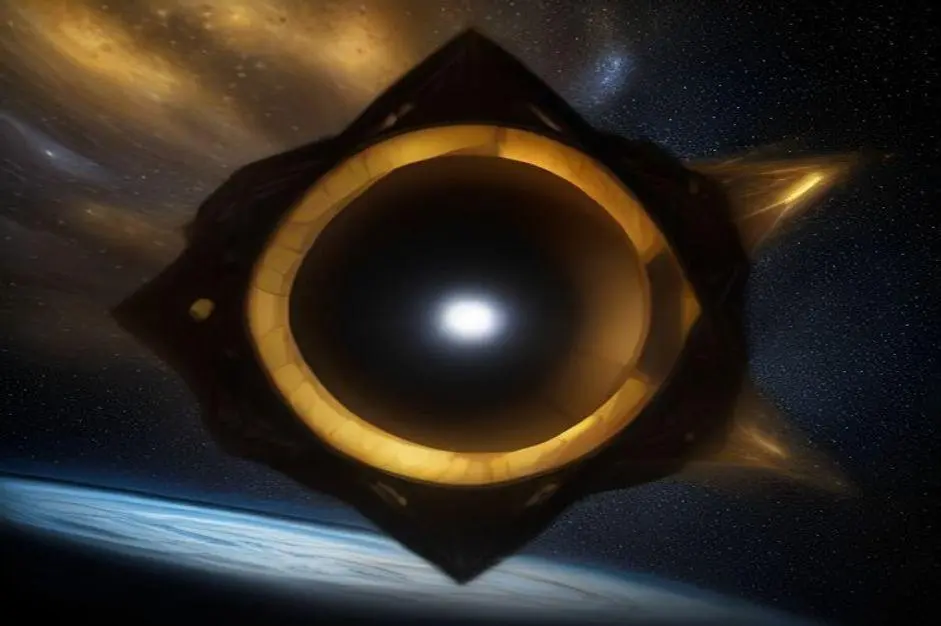
For centuries, humanity has observed the night sky under the assumption that our observable universe represents the sum total of existence. However, modern theoretical physics and cosmology have begun to challenge this anthropocentric perspective. The Multiverse Theory suggests that our universe may be merely one bubble in an expansive landscape of realities, shifting the paradigm of our place in the cosmos from a singular event to a localized manifestation within an infinite structure [1].
The Conceptual Foundations: From Inflation to Fine-Tuning
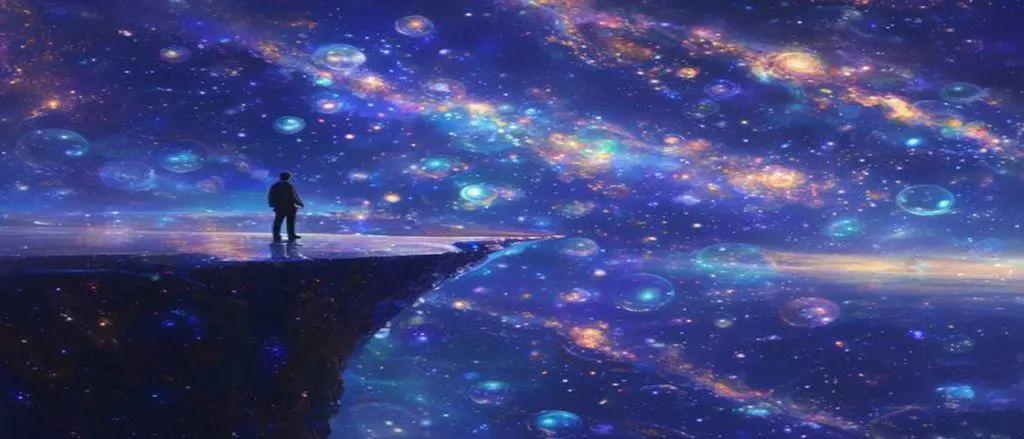
The transition from philosophical speculation to mathematical framework has been driven by our understanding of the early universe. The inflationary model proposes that shortly after the Big Bang, space underwent exponential expansion. If this process did not terminate simultaneously everywhere, it would create isolated "bubble" universes, forever separated by regions of space-time expanding faster than light [2]. This framework provides a compelling explanation for the fine-tuning problem; rather than viewing the precise calibration of physical constants as a miracle, we can interpret it as a selection effect where we naturally find ourselves in a habitable region among an infinite diversity of environments.
Quantum Mechanics and the Many-Worlds Interpretation
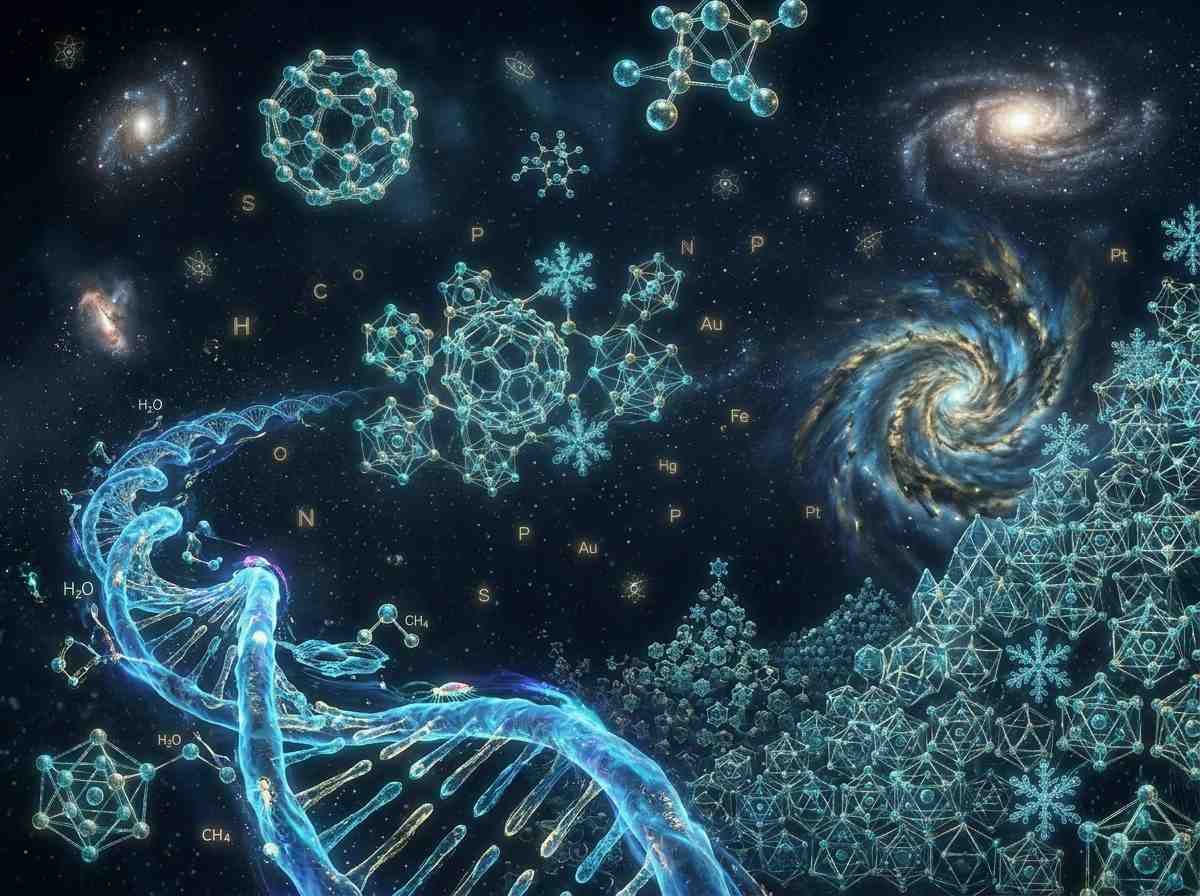
At the subatomic level, the universe operates on probabilistic rules that defy our deterministic intuition. The Many-Worlds Interpretation (MWI), first proposed by Hugh Everett III, resolves the "measurement problem" by suggesting that the quantum wavefunction never collapses [3]. Instead, every quantum decision point triggers a branching of reality. As we navigate the "tree" of possibilities, each branch represents a distinct, parallel world where every potential outcome is realized. This interpretation preserves the mathematical integrity of the Schrödinger equation, removing the need for a mysterious observer-induced collapse.
Higher Dimensions and Brane Cosmology
Our limited perception of four dimensions often obscures the true architecture of reality. Theories in modern cosmology, such as String Theory, suggest the existence of extra, hidden dimensions curled into infinitesimal scales [4]. Through the lens of Brane Cosmology, our universe is viewed as a three-dimensional membrane, or "brane," suspended within a higher-dimensional "bulk." Some physicists hypothesize that the Big Bang itself was a collision between such branes, an event that would have profound implications for the physical constants we observe today.
The Mathematical Reality of Infinity and Identity
If we accept the premise of an infinite multiverse, the implications for human identity are staggering. Given an infinite expanse, the finite combinations of matter and energy must eventually repeat, leading to the statistical inevitability of doppelgangers [5]. This concept, often linked to modal realism, suggests that every possible configuration of your life has occurred or will occur elsewhere. While this challenges our sense of individuality, it aligns with the logic that any physically possible outcome will eventually manifest within the broader cosmic tapestry.
Observational Challenges and Future Prospects
The greatest hurdle for multiverse theories remains the inability to directly observe regions beyond our causal horizon. However, researchers are seeking indirect "fingerprints," such as potential anomalies in the Cosmic Microwave Background (CMB) radiation that could indicate historical bubble collisions [6]. Furthermore, advancements in gravitational wave astronomy and high-fidelity computer simulations allow scientists to test the viability of these models against our standard cosmological frameworks. While definitive proof remains elusive, the quest to verify these theories continues to refine our understanding of physical law.
Conclusion
The Multiverse Theory represents the next great evolution in our scientific worldview, challenging us to look beyond the singularity of our own existence. While these concepts push the boundaries of current empirical verification, they remain the most logical extension of our best theories in quantum mechanics and cosmology. As we continue to probe the edges of the universe, we invite you to keep questioning the nature of reality and follow the latest developments in theoretical physics, as the answer to our origins may well lie just beyond our horizon.
References
- Guth, A. H. (2007). "Eternal inflation and its implications." Journal of Physics A: Mathematical and Theoretical, 40(25), 6811. View source
- Steinhardt, P. J. (2011). "The inflation debate: Is the theory at the heart of modern cosmology deeply flawed?" Scientific American. View source
- Everett, H. (1957). "Relative State Formulation of Quantum Mechanics." Reviews of Modern Physics, 29(3), 454–462. View source
- Greene, B. (2011). "The Hidden Reality: Parallel Universes and the Deep Laws of the Cosmos." Vintage Books. View source
- Tegmark, M. (2003). "Parallel Universes." Scientific American, 288(5), 40-51. View source
- Feeney, S. M., et al. (2011). "First observational tests of eternal inflation: Analysis methods and null results." Physical Review D, 84(4), 043518. View source

I'm Viktor Mikhailov from Russia. After 18 years working across topics related to science communicator explaining physics, astronomy, and space exploration in clear, accessible language., I’ve discovered that the best writing comes from empathy, clarity, and a genuine desire to connect.