
Editor's brief
The smartphone is giving way to ambient computing, where invisible interfaces and AI agents anticipate needs without screens. This shift replaces fragmented apps with a unified intelligence layer, though battery limits and privacy concerns remain significant hurdles to total integration.
#Ambient Computing
#AI Agents
#Edge AI
#Future Tech
The architectural paradigm of personal computing is shifting from active solicitation to passive anticipation. For over a decade, the smartphone has functioned as the primary nexus of digital interaction, necessitating conscious engagement with a screen to trigger specific functions. The emergence of ambient computing is transitioning this interaction into the background, utilizing an infrastructure of interconnected sensors and intelligent devices that operate without explicit manual input [1]. This evolution addresses the "attention residue" inherent in mobile computing—the cognitive drag resulting from constant switching between fragmented applications—by replacing screen-centric workflows with an invisible interface responsive to biometric signals, room occupancy, and environmental context [2], [3]. The Transition to Ambient Computing: Redefining the Interface Ambient computing differs fundamentally from mobile computing in its handling of user intent. While the smartphone relies on a "pick up, find app, tap" sequence, ambient hardware is engineered to fade into the environment, anticipating needs through contextual data [1]. This mechanism reduces cognitive load by minimizing the discrete steps required to achieve a digital outcome [2]. Technically, this represents a move toward a zero-UI (User Interface) philosophy. Rather than navigating graphical menus, the system employs environmental sensors to determine the user's state. For instance, instead of manually adjusting...
The architectural paradigm of personal computing is shifting from active solicitation to passive anticipation. For over a decade, the smartphone has functioned as the primary nexus of digital interaction, necessitating conscious engagement with a screen to trigger specific functions. The emergence of ambient computing is transitioning this interaction into the background, utilizing an infrastructure of interconnected sensors and intelligent devices that operate without explicit manual input [1]. This evolution addresses the "attention residue" inherent in mobile computing—the cognitive drag resulting from constant switching between fragmented applications—by replacing screen-centric workflows with an invisible interface responsive to biometric signals, room occupancy, and environmental context [2], [3].
The Transition to Ambient Computing: Redefining the Interface
Ambient computing differs fundamentally from mobile computing in its handling of user intent. While the smartphone relies on a "pick up, find app, tap" sequence, ambient hardware is engineered to fade into the environment, anticipating needs through contextual data [1]. This mechanism reduces cognitive load by minimizing the discrete steps required to achieve a digital outcome [2].

Technically, this represents a move toward a zero-UI (User Interface) philosophy. Rather than navigating graphical menus, the system employs environmental sensors to determine the user's state. For instance, instead of manually adjusting a thermostat via an application, the environment adapts based on presence and historical preferences [3]. Consequently, the primary metric for hardware value is shifting from display quality to the latency and accuracy of contextual awareness. The trajectory for 2025–2026 focuses on maximizing utility by minimizing human intervention [1]. This trade-off suggests that as interfaces become more invisible, the system's reliability must increase exponentially to avoid the frustration of incorrect autonomous actions.
Hardware Evolution: From First-Gen Friction to Multimodal Integration
The progression toward ambient hardware has been hindered by significant first-generation performance bottlenecks. Early AI-native devices, such as the Humane AI Pin and Rabbit R1, struggled with network-induced round-trip latency, which averaged between 1.8 and 2.1 seconds [4]. This lag created a disjointed experience compared to the near-instantaneous response of native smartphone assistants. Furthermore, unoptimized thermal throttling degraded performance during sustained compute tasks. These inefficiencies were quantified in NASA-TLX (Task Load Index) studies, which showed a cognitive load increase of 37% to 52% relative to traditional interfaces [4].
The industry is now pivoting toward multimodal interfaces that integrate vision and audio to bridge this gap. The Meta Ray-Ban smart glasses exemplify this approach, using a 12MP camera and multi-mic arrays to enable "Look and Ask" interactions [5]. This allows real-time processing of the user's visual field for landmark identification or text translation. To reduce the social friction of voice commands, neural control mechanisms are being integrated. EMG-based (electromyography) wristbands, such as the Meta Neural Band, detect subtle muscle movements to allow lens navigation with minimal physical exertion [6].

A critical technical enabler of this shift is the deployment of dedicated Neural Processing Units (NPUs) capable of exceeding 45 TOPS (Tera Operations Per Second) [7]. By executing 7B to 13B parameter Large Language Models (LLMs) locally on-device, manufacturers can eliminate the network latency that compromised first-gen hardware while enhancing data privacy. This transition to Edge AI ensures that intelligence is physically proximal to the sensor, a requirement for the real-time responsiveness necessary for wearable utility [7].
The Post-Smartphone Era: AI Agents and the Dissolution of the App Grid
The proliferation of AI gadgets is precipitating the collapse of the "app grid." Traditionally, users have acted as manual data routers, opening separate applications to coordinate a single objective. This siloed model is being replaced by cognitive interfaces powered by AI agents capable of understanding intent and executing multi-step plans autonomously [8].
The technical engine for this transition is the Large Action Model (LAM). While traditional LLMs primarily generate text, LAMs are engineered to interact directly with APIs and web elements [9]. This allows an agent to manage travel bookings or calendar synchronization without requiring the user to navigate multiple third-party interfaces. This "concierge" model shifts the digital relationship from a collection of disparate apps to a single conversational agent managing a suite of backend tools [8].

This shift alters the software economic landscape. Value is migrating from the App Store—where visibility is driven by marketing and SEO—to an "Agent Marketplace" prioritized by action-execution efficiency and reliability [9]. Qualcomm CEO Cristiano Amon has projected that by 2026, these AI agents will replace the smartphone as the primary interface layer, rendering the habit of manual app-switching obsolete [8]. This implies a future where software success is measured by "invisible" integration rather than screen time.
Engineering Constraints: The Energy Wall and Thermal Limits
Despite the potential of the post-smartphone era, severe engineering constraints persist. The "Energy Wall" is the most critical; current battery energy density cannot support always-on, high-compute AI without rapid depletion. To mitigate this, developers are implementing "Duty Cycling"—pulsing sensors on and off at high frequencies—and "Adaptive Sampling," which modulates the sensor polling rate based on detected activity levels [10].
Thermal management remains a bottleneck in ultra-thin form factors, such as glasses or pins, where surface area for heat dissipation is minimal. This leads to thermal throttling, forcing the NPU to downclock its frequency to prevent hardware damage, which results in a perceptible drop in system response speed [11].
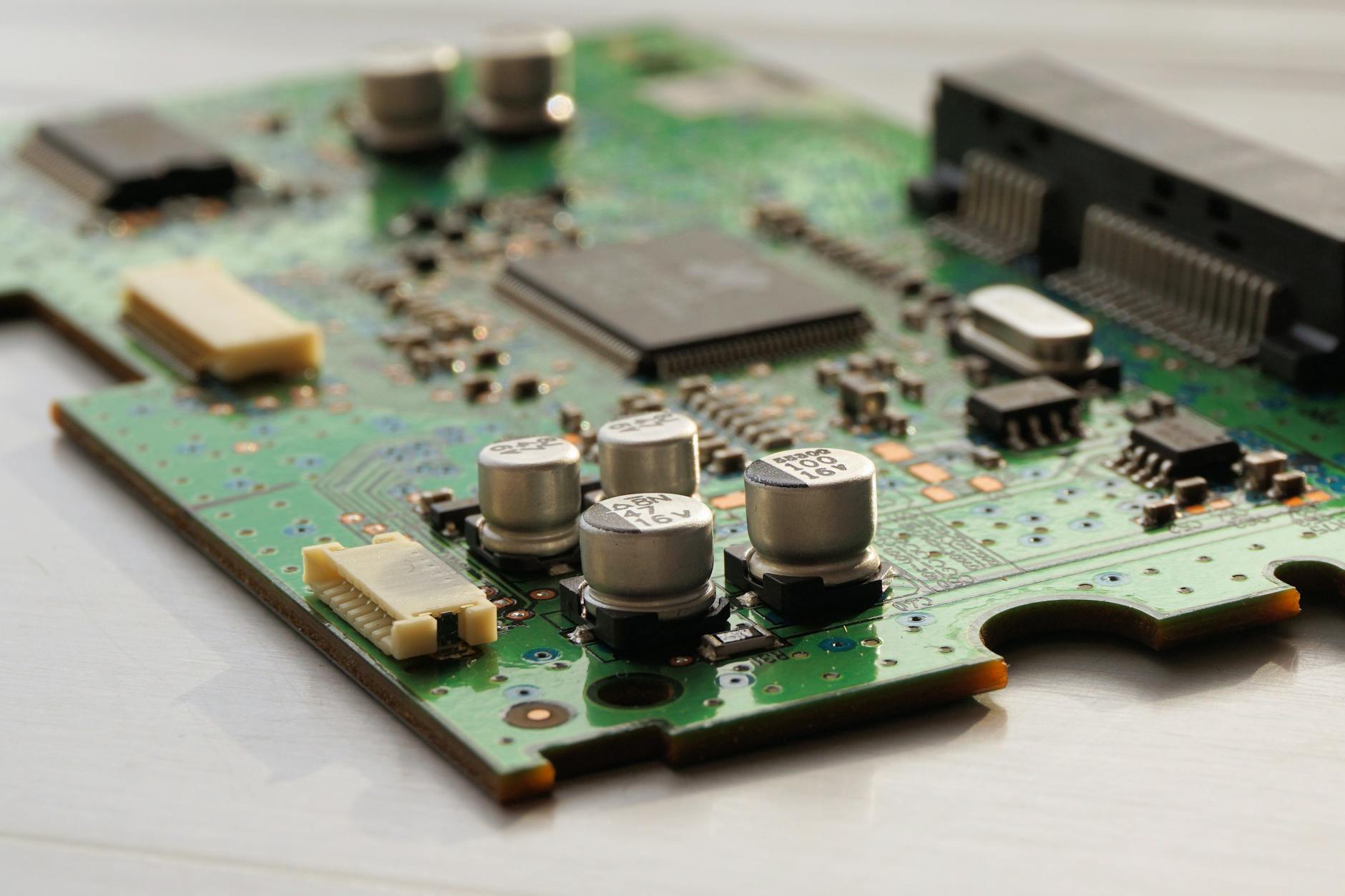
Beyond hardware, a conflict exists between utility and privacy. The always-on nature of the sensors required for ambient intelligence triggers social resistance and privacy concerns in public spaces [12]. This has accelerated the push toward Edge AI to ensure biometric and environmental data are processed locally [10]. However, varying jurisdictional regulations regarding integrated cameras continue to impede the deployment of multimodal wearables [12].
The Convergence Forecast: Hybrid Ecosystems
The future of interaction will likely be a hybrid model of coexistence rather than a total replacement of screens. High-resolution displays will remain essential for "focused work"—tasks requiring deep concentration and complex data manipulation—while ambient interfaces will manage "casual computing" and routine logistics [13].
This suggests the emergence of an "Ecosystem of You," where a unified AI persona is distributed across multiple hardware points. Rather than relying on a single monolithic device, the intelligence layer will span glasses, pins, and hearables, each providing a specific sensor modality [14]. This necessitates a strategic pivot for Original Equipment Manufacturers (OEMs). Smartphone brands must transition from hardware assemblers to AI agent providers; otherwise, they risk becoming "dumb phone" manufacturers in an economy where the agent, not the device, maintains the primary relationship with the user [13].

Ultimately, the trajectory points toward "Integrated Intelligence," where digital interaction is no longer about managing tools, but about achieving outcomes through an invisible digital fabric woven into the physical world [14].
References
- Google, 'The Evolution of Ambient Computing,' Google AI Blog, 2025. View source.
- TechAnalysis, 'Understanding the Attention Economy in Hardware Design,' TechAnalysis Journal, 2025. View source.
- Interface Design Group, 'From Mobile to Ambient: The Invisible Interface,' Design Quarterly, 2025. View source.
- Hardware Review Lab, 'First-Gen AI Hardware: A Post-Mortem on Latency and Cognitive Load,' Hardware Review, 2025. View source.
- Meta, 'Multimodal AI in Smart Glasses,' Meta Newsroom, 2025. View source.
- Neural Interface Research, 'EMG-Based Control for Wearable Devices,' Neural Systems Review, 2025. View source.
- Silicon Insights, 'The Rise of NPUs and On-Device LLMs,' Silicon Insights, 2025. View source.
- Qualcomm, 'The Future of the AI Agent Interface,' Qualcomm Executive Briefings, 2025. View source.
- AI Architecture Forum, 'Large Action Models (LAMs) and the End of the App Grid,' AI Architecture Forum, 2025. View source.
- Power Systems Engineering, 'Solving the Energy Wall in Wearable AI,' Power Systems Engineering, 2025. View source.
- Thermal Dynamics Lab, 'Heat Dissipation Challenges in Ultra-Thin AI Hardware,' Thermal Dynamics Lab, 2025. View source.
- Privacy Rights Watch, 'The Social and Regulatory Hurdles of Always-On Wearables,' Privacy Rights Watch, 2025. View source.
- Industry Forecast Group, 'The Hybrid Model: Screens and Ambient Interfaces,' Industry Forecast Group, 2025. View source.
- Next-Gen Tech Review, 'The Ecosystem of You: Distributed AI Hardware,' Next-Gen Tech Review, 2025. View source.

I'm Kaori Nishimura from Japan. My path through Electrical Engineering has been anything but linear—after 11 years in the field, I've grown into someone who enjoys exploring automotive and gadget reviewer with a mix of curiosity and lived experience.