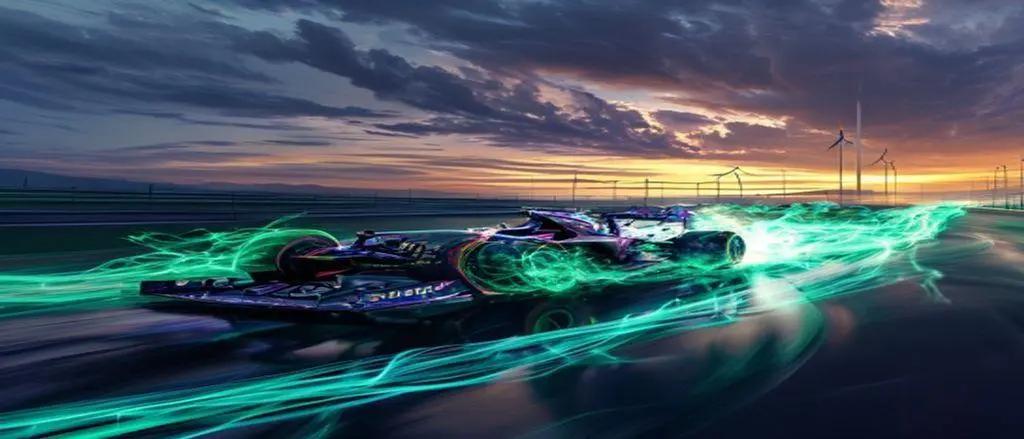
Editor's brief
Synthetic fuels offer a lifeline to the internal combustion engine by decoupling high-performance racing from carbon emissions. Through Direct Air Capture and green hydrogen, e-fuels maintain the sensory thrill of motorsports while providing a scalable, carbon-neutral blueprint for aviation and heavy shipping.
#Synthetic fuels
#Motorsports
#Sustainability
#Carbon neutral
The roar of a high-displacement engine is more than a byproduct of combustion; it is a psychological trigger. For the driver, a shift at 15,000 RPM provides a critical data point—a visceral, auditory feedback loop on engine health and power delivery that a silent electric motor cannot replicate. For the spectator, it is the heartbeat of the sport. However, this sensory heritage now sits in direct opposition to global climate mandates. The challenge for governing bodies like the FIA is not just about reducing emissions, but about decoupling high-performance athletics from carbon without stripping the sport of its identity [1]. The Physics of Performance: Why Batteries Aren't Enough Electrification was the initial response to the carbon crisis, but physics presents a stubborn obstacle in energy density. In endurance racing, where every gram of weight influences tire degradation and braking distances, the mass of current battery technology is a significant handicap. A battery capable of sustaining a vehicle through a 24-hour race would fundamentally alter the chassis' center of gravity and increase the physical toll on the driver. Beyond mass, the logistical bottleneck of charging times cannot compete with the rapid turnaround of a fuel pit stop. Synthetic fuels—or e-fuels—provide a strategic resolution. By capturing carbon from the atmosphere and combining it with hydrogen produced from renewable energy, these fuels create a carbon-neutral loop. This approach preserves the mech...
The roar of a high-displacement engine is more than a byproduct of combustion; it is a psychological trigger. For the driver, a shift at 15,000 RPM provides a critical data point—a visceral, auditory feedback loop on engine health and power delivery that a silent electric motor cannot replicate. For the spectator, it is the heartbeat of the sport. However, this sensory heritage now sits in direct opposition to global climate mandates. The challenge for governing bodies like the FIA is not just about reducing emissions, but about decoupling high-performance athletics from carbon without stripping the sport of its identity [1].
The Physics of Performance: Why Batteries Aren't Enough
Electrification was the initial response to the carbon crisis, but physics presents a stubborn obstacle in energy density. In endurance racing, where every gram of weight influences tire degradation and braking distances, the mass of current battery technology is a significant handicap. A battery capable of sustaining a vehicle through a 24-hour race would fundamentally alter the chassis' center of gravity and increase the physical toll on the driver.

Beyond mass, the logistical bottleneck of charging times cannot compete with the rapid turnaround of a fuel pit stop. Synthetic fuels—or e-fuels—provide a strategic resolution. By capturing carbon from the atmosphere and combining it with hydrogen produced from renewable energy, these fuels create a carbon-neutral loop. This approach preserves the mechanical architecture of the piston and crankshaft, allowing the sport to evolve without abandoning the internal combustion engine (ICE).
The Chemistry of the Closed-Loop System
E-fuels flip the traditional extraction model. Instead of pulling prehistoric carbon from the earth, they utilize Direct Air Capture (DAC) to strip existing carbon dioxide from the atmosphere [2]. This captured CO2 is synthesized with "green" hydrogen, produced by splitting water through electrolysis powered by wind, solar, or hydroelectric sources. While the engine still emits CO2 during a race, it simply returns the carbon removed during production, resulting in a circular accounting method that prevents a net increase in atmospheric greenhouse gases [3].

From a mechanical standpoint, these fuels are designed as "drop-in" replacements. Chemists can engineer the molecular structure and octane rating to mimic high-performance gasoline, meaning teams do not need to redesign the fundamental combustion chamber. Additionally, laboratory-grade synthetic fuels lack the sulfur impurities found in crude oil, which reduces secondary pollutants and minimizes the long-term degradation of engine components.
Precision Engineering and Thermal Management
While marketed as "drop-in," the reality in a precision-engineered Formula 1 or Le Mans power unit is complex. Operating at the limit of thermal efficiency means that slight deviations in fuel volatility—the tendency of a liquid to vaporize—can disrupt the combustion cycle. Synthetic blends often possess different viscosity profiles, requiring engineers to redesign fuel injection systems to ensure optimal atomization. Poor atomization leads to uneven ignition and "hot spots," which can trigger catastrophic engine knock at high RPMs.

This chemical shift necessitates an overhaul of Engine Control Unit (ECU) mapping. Teams use advanced telemetry to adjust ignition timing and air-fuel ratios in real-time to manage the engine's heat signature. Because synthetic fuels alter how heat is distributed across the cylinder head and piston crowns, cooling systems must be recalibrated to prevent overheating without adding aerodynamic drag. This synergy extends to Kinetic Energy Recovery Systems (KERS), where lean burn cycles extend range while electric boosts fill the torque gap during acceleration.
The Paddock as a Global Laboratory
Formula 1 is utilizing its platform to prove that "green" does not mean "weak." The sport's commitment to reach net-zero carbon emissions by 2030 includes a pivot to 100% sustainable fuels for the 2026 engine regulations [1]. This is a high-stakes proof of concept: if a synthetic blend can survive the thermal stress of a Grand Prix in Singapore or the high-altitude demands of Mexico City, it validates the fuel for millions of existing ICE vehicles worldwide.

This transition requires unprecedented collaboration between automotive manufacturers and chemical engineers. Fuel in a high-performance engine acts as both a coolant for the piston head and a lubricant for the cylinder walls. Iterative testing to ensure that synthetic blends maintain this functionality under extreme pressure moves the focus of automotive development from the metal of the engine to the molecule of the fuel.
The Economics of Scaling Synthesis
The primary barrier to widespread adoption is the cost gap. DAC is energy-intensive, making the per-liter cost of e-fuels significantly higher than extracted crude. To bridge this, entities like Porsche and Aramco are investing in large-scale plants, such as the Haru Oni project in Chile, which leverages wind power to achieve economies of scale [4].

The economic advantage of e-fuels lies in existing infrastructure. Unlike hydrogen or electric power, which require a multi-trillion-dollar overhaul of power grids and stations, synthetic fuels can move through current pipelines and be sold at existing pumps. Government incentives for carbon sequestration in the EU and US are further accelerating this by treating carbon capture as a public utility, recognizing that the environmental cost of fossil fuels outweighs the temporary subsidies required for synthesis plants.
Beyond the Track: A Blueprint for Heavy Industry
The migration of track-tested technology into the consumer market is now shifting toward chemical frameworks. This evolution allows for the preservation of automotive history; vintage vehicles can remain road-legal in a green economy without requiring the removal of their original engines. More importantly, the research informs Sustainable Aviation Fuels (SAF) and maritime shipping, where the energy density required for long-haul transport makes batteries impractical.

By proving that liquid fuels can be decoupled from fossil extraction, motorsports are providing a blueprint for any sector that requires massive energy loads over vast distances. We are moving toward a hybrid reality where the mechanical architecture of the past is powered by the chemical intelligence of the future.
Conclusion
The race for synthetic fuels proves that the roar of the engine and the health of the planet are not mutually exclusive. By integrating Direct Air Capture and green hydrogen, the industry is transforming the internal combustion engine from an environmental liability into a sustainable asset. The path to net-zero does not require the immediate scrapping of every gasoline engine, but rather a fundamental evolution in what we put in the tank. The "green light" for the ICE is not a return to the past, but a high-tech leap forward.
References
- FIA, "Formula 1 Net Zero 2030 Strategy," official sustainability report.
- International Energy Agency (IEA), "Direct Air Capture: A Critical Technology for Net Zero," 2023.
- SAE International, "Comparative Analysis of Synthetic Hydrocarbons in High-Compression Engines," Technical Paper.
- Porsche AG, "Haru Oni: Producing Synthetic Fuels in Chile," project specifications.

Hello, I'm Marcus Johnson. Growing up in United States shaped much of how I see the world, and after 15 years working around sports science writer who connects training methods, injury prevention, and performance psychology for athletes and active readers., I’ve learned to write in a way that’s both thoughtful and honest.