
Editor's brief
Smartphone intelligence is migrating from remote servers to local silicon via Neural Processing Units. This shift reduces latency and enhances privacy, though physical constraints like thermal throttling and RAM limits necessitate a hybrid approach between the edge and the cloud.
#On-device AI
#NPUs
#Edge Computing
#Mobile Privacy
Smartphone architecture is undergoing a fundamental pivot, migrating from a dependence on remote data centers toward local, autonomous intelligence. While artificial intelligence has long existed on mobile devices, it previously functioned as a thin client for cloud-based processing. The current transition toward on-device AI represents a shift to the "edge," where machine learning workloads are executed directly on the handset's silicon. This is more than a technical optimization; it is a redesign of how mobile operating systems manage user data and hardware resources. Defining On-Device AI: The Shift from Cloud to Edge On-device AI is the local execution of machine learning algorithms and generative models on a smartphone's hardware, eliminating the need to send data requests to remote servers [1]. In a traditional Cloud AI workflow, a user's prompt travels to a remote GPU cluster, is processed by a model with hundreds of billions of parameters, and returns to the device. On-device AI removes this network round trip, reducing latency to milliseconds [1]. This speed is essential for real-time utility, such as live captions or biometric face detection, where even minor lag disrupts the user experience [1]. The primary boundary between these systems is scale. Cloud AI leverages massive models requiring immense compute power, while on-device AI utilizes Small Language Models (SLMs) optimized for the strict memory and power envelopes of mobile hardware [1]. This creates a critic...
Smartphone architecture is undergoing a fundamental pivot, migrating from a dependence on remote data centers toward local, autonomous intelligence. While artificial intelligence has long existed on mobile devices, it previously functioned as a thin client for cloud-based processing. The current transition toward on-device AI represents a shift to the "edge," where machine learning workloads are executed directly on the handset's silicon. This is more than a technical optimization; it is a redesign of how mobile operating systems manage user data and hardware resources.
Defining On-Device AI: The Shift from Cloud to Edge
On-device AI is the local execution of machine learning algorithms and generative models on a smartphone's hardware, eliminating the need to send data requests to remote servers [1]. In a traditional Cloud AI workflow, a user's prompt travels to a remote GPU cluster, is processed by a model with hundreds of billions of parameters, and returns to the device. On-device AI removes this network round trip, reducing latency to milliseconds [1]. This speed is essential for real-time utility, such as live captions or biometric face detection, where even minor lag disrupts the user experience [1].

The primary boundary between these systems is scale. Cloud AI leverages massive models requiring immense compute power, while on-device AI utilizes Small Language Models (SLMs) optimized for the strict memory and power envelopes of mobile hardware [1]. This creates a critical functional advantage: connectivity independence. Features remain operational in offline environments, whereas Cloud AI fails without a stable connection [1]. To maximize efficiency, flagship devices now employ hybrid architectures. Latency-sensitive and private tasks are handled locally, while complex reasoning or large-scale synthesis is routed to the cloud [1]. This implies that mobile intelligence is no longer a binary state of connected or disconnected, but a sliding scale of processing distribution based on task complexity.
The Engine of Innovation: Neural Processing Units (NPUs)
This move toward local AI is powered by the Neural Processing Unit (NPU), a specialized accelerator designed to optimize deep learning tasks [2]. Unlike general-purpose processors, NPUs are engineered for the scalar, vector, and tensor mathematics required by neural networks. They perform the simultaneous matrix operations central to AI far more efficiently than a central processing unit (CPU) [2].
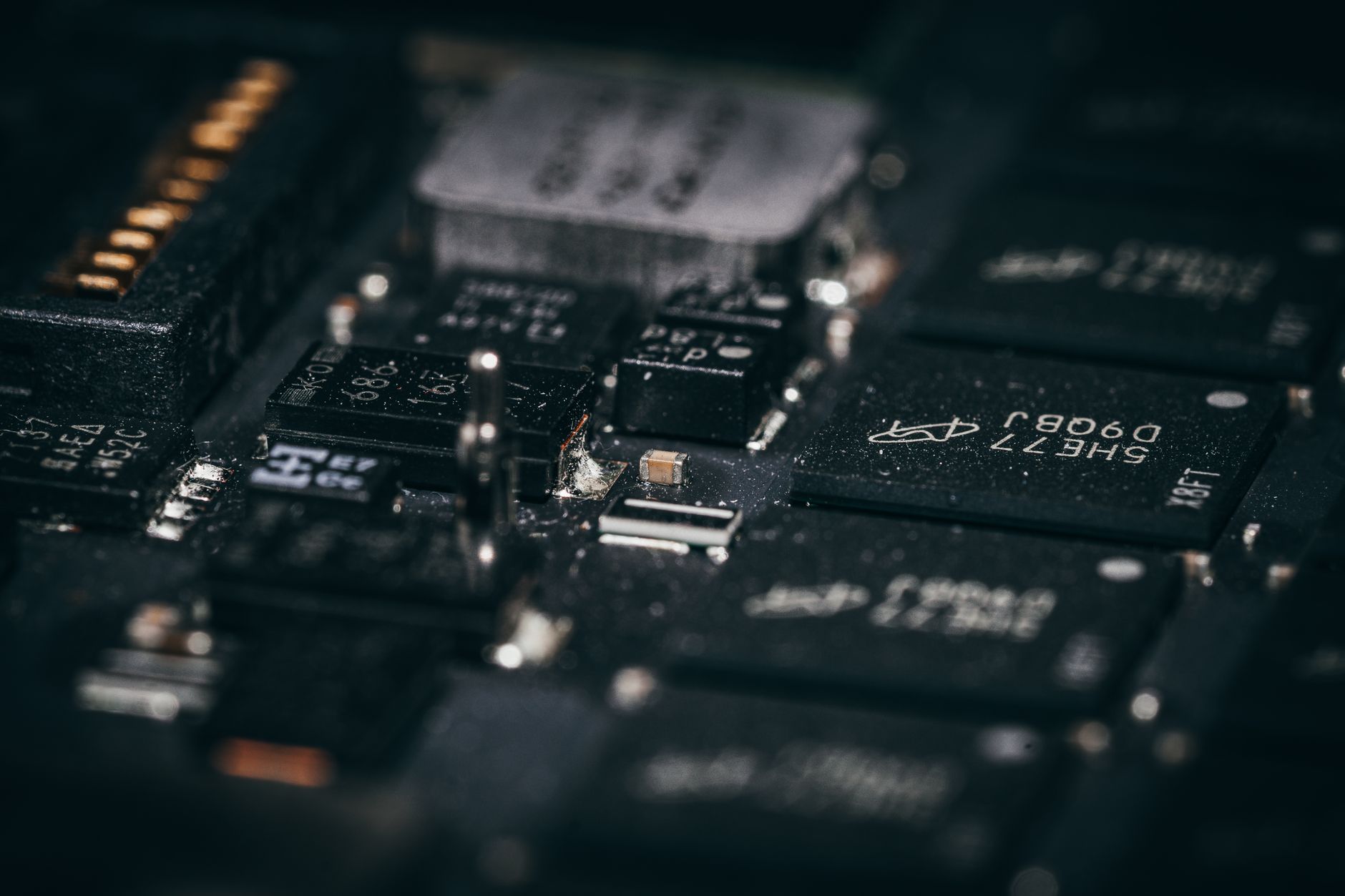
Within the System-on-Chip (SoC), the CPU handles general OS tasks via sequential processing, and the GPU manages graphics and parallel data at a high power cost [2]. The NPU fills the gap by providing high-throughput AI inference—the process of using a pre-trained model to make predictions—while maintaining a low energy profile [2]. This silicon is now standard in flagship SoCs, including the Qualcomm Snapdragon 8 Elite, the Apple A18 and A19 Pro series, and the Google Tensor G4 and G5 [2]. While NPUs support limited training, their primary role is inference [2]. For the power user, this specialization ensures that AI background processes do not "steal" cycles from the CPU or GPU, preventing UI stutter or frame drops during intensive operations.
Transforming User Experience: Personalized Flagship Features
NPUs enable features that feel instantaneous rather than requested. Real-time language processing is a primary example; Samsung's Live Translate and Apple's translation tools in Messages and FaceTime utilize on-device models to facilitate voice-to-voice communication without cloud-induced delays [3]. Similarly, computational photography has evolved from static filters to active on-device computer vision. Tools like Google's Magic Editor and Samsung's Photo Assist execute complex object manipulation and real-time background blurring by processing pixels locally [3].

AI is also becoming proactive rather than reactive. Google's Gemini Live provides hands-free voice assistance, while Pixel Screenshots organizes saved information locally to maintain context of the user's data [3]. At the system level, AI manages battery optimization and performance tuning based on individual habits to extend hardware longevity [3]. These capabilities define the current flagship generation, including the Samsung Galaxy S24 and S25 series (Galaxy AI), the Apple iPhone 16 and 17 Pro (Apple Intelligence), and the Google Pixel 9 [3]. This evolution suggests the smartphone is shifting from a passive tool that executes commands to an active assistant that anticipates needs through continuous local observation.
The Privacy-First Paradigm: Local ML and Federated Learning
Local AI introduces a privacy-first machine learning paradigm. Through data localization, sensitive raw information—such as private messages, health metrics, and personal photos—remains on the device, drastically reducing the attack surface for mass data breaches [4]. To improve these models without compromising this isolation, developers employ Federated Learning (FL), a decentralized training method [4].

In an FL workflow, a global model is sent from a central server to the local device. The model is trained on the user's local data, but instead of uploading the raw data, the device only transmits mathematical updates, such as gradients or weights [4]. To further secure this, companies use secure aggregation—combining encryption and multiparty computation to ensure individual patterns cannot be isolated during the merge [4]. Differential privacy adds mathematical "noise" to these updates, making it virtually impossible to reverse-engineer a specific user's data from the global model [4]. Despite these guards, a boundary of trust remains; while raw data is protected, metadata and training signals can still reveal participation behaviors [4]. Consequently, on-device AI raises the privacy floor but introduces a new challenge in managing behavioral leakage.
Hardware Bottlenecks: Thermal, Power, and Memory Constraints
Despite NPU advancements, on-device AI is limited by physical constraints. Thermal throttling is the first major hurdle. Heavy AI workloads spike power consumption and generate heat; if the device cannot dissipate this efficiently, the system throttles performance to prevent hardware damage, leading to application lag [5]. Power efficiency is equally critical, as generating a single AI image can consume significant battery reserves, threatening daily device longevity [5].

The most rigid constraint is the "RAM wall." Large Language Models (LLMs) are memory-intensive; for example, Google's Gemini Nano requires roughly 2GB of idle RAM to function, making LPDDR5 capacity and bandwidth a primary bottleneck [5]. Since flagship phones typically offer 8GB to 16GB of RAM, they cannot run "frontier" models like GPT-4. This forces a reliance on quantized models—compressed versions that sacrifice some precision to fit within mobile hardware limits [5]. Because the growth of model size continues to outpace the growth of mobile silicon, the industry will not move entirely to the edge [5]. This reality ensures that hybrid cloud-edge architectures will remain permanent, with the device acting as a smart filter that determines when a task exceeds its own local capacity.
References
- Google, 'On-Device AI vs. Cloud AI: Understanding the Edge,' Google Cloud Blog, 2024. View source.
- Qualcomm, 'The Role of the NPU in Modern SoC Architecture,' Qualcomm Tech Design, 2024. View source.
- Samsung Electronics, 'Galaxy AI and the Future of Mobile Experience,' Samsung Newsroom, 2024. View source.
- Apple, 'Privacy and Machine Learning in Apple Intelligence,' Apple Security Research, 2024. View source.
- Android Developers, 'Optimizing LLMs for Mobile Hardware,' Android Developers Blog, 2024. View source.

Greetings! Daniel Kim here. I’ve spent 4 years navigating the world of gaming and tech columnist who tracks esports, game design trends, and the communities that form around them., and my roots in South Korea and training in Game Design continue to shape how I tell stories and break down ideas.