Editor's brief
Space travel is evolving from a rigid government monopoly into a commercial industry driven by iterative engineering and reusable rockets. This shift lowers the barrier to entry, transforming the Kármán line from a restrictive boundary into a gateway for residence and galactic logistics.
#Commercial Space
#Aerospace
#Orbital Logistics
#Space Exploration
The Kármán line, the invisible boundary 100 kilometers above sea level, was once a fence guarded by the most rigid bureaucracies on Earth [1]. For decades, crossing this threshold required the backing of a superpower and a physiological profile mirroring a fighter pilot's. In the early days of the Space Race, ascent was a proxy for military dominance; the rockets that carried Yuri Gagarin and Alan Shepard were essentially modified intercontinental ballistic missiles. The objective was not travel, but proof of concept—a demonstration that a specific political ideology possessed the engineering capacity to conquer the vacuum. Today, this geopolitical monopoly has dissolved, replaced by a model driven by venture capital and an appetite for risk, transforming the atmospheric barrier from a wall into a doorway. The Shift Toward Iterative Engineering The transition from government-led exploration to commercial spaceflight is most evident in the pace of technological iteration. Government agencies, burdened by public accountability and a zero-failure mandate, traditionally followed a linear development path: years of simulation followed by a single, meticulously polished launch. Private firms, most notably SpaceX, have inverted this logic by adopting an "iterative design" philosophy. They build, fly, fail, and refine in rapid cycles. When a Starship prototype explodes during a test flight, it is viewed as a successful data collection event rather than a catastrophic failure. This wi...
The Kármán line, the invisible boundary 100 kilometers above sea level, was once a fence guarded by the most rigid bureaucracies on Earth [1]. For decades, crossing this threshold required the backing of a superpower and a physiological profile mirroring a fighter pilot's. In the early days of the Space Race, ascent was a proxy for military dominance; the rockets that carried Yuri Gagarin and Alan Shepard were essentially modified intercontinental ballistic missiles. The objective was not travel, but proof of concept—a demonstration that a specific political ideology possessed the engineering capacity to conquer the vacuum. Today, this geopolitical monopoly has dissolved, replaced by a model driven by venture capital and an appetite for risk, transforming the atmospheric barrier from a wall into a doorway.
The Shift Toward Iterative Engineering
The transition from government-led exploration to commercial spaceflight is most evident in the pace of technological iteration. Government agencies, burdened by public accountability and a zero-failure mandate, traditionally followed a linear development path: years of simulation followed by a single, meticulously polished launch. Private firms, most notably SpaceX, have inverted this logic by adopting an "iterative design" philosophy. They build, fly, fail, and refine in rapid cycles. When a Starship prototype explodes during a test flight, it is viewed as a successful data collection event rather than a catastrophic failure. This willingness to break hardware to find the physical limits of a system has compressed decades of traditional development into a few years.
As a result, the barrier to entry for the individual has plummeted. The "Right Stuff" era demanded a decade of military flight training to withstand the brutal G-forces of capsules that were, essentially, metal bells. Modern commercial capsules, such as the Crew Dragon, shift the burden of complexity from the human to the computer. By automating docking and reentry sequences, the requirement for the passenger moves from "mission specialist" to "spaceflight participant." The ability to glimpse the curvature of the Earth is no longer tied to a military commission, but to a ticket.
The Mathematics of Reusability
The fundamental absurdity of early space exploration was the disposable rocket. For half a century, the most complex machines in history were discarded in the ocean after a single use—an economic model akin to flying a Boeing 747 across the Atlantic and scrapping the aircraft upon landing. The mastery of vertical landing for orbital-class boosters has turned the rocket into a vehicle rather than a consumable. By using grid fins for steering and cold-gas thrusters for orientation, the physics of controlled descent have been solved, turning a ballistic trajectory into a precise landing [2].
This shift has triggered a precipitous drop in the cost per kilogram to reach Low Earth Orbit (LEO). While SpaceX focuses on high-cadence orbital delivery, Blue Origin has prioritized the suborbital experience, providing the sensation of weightlessness by crossing the Kármán line without the immense energy required for orbital velocity. The relationship between the state and private firms has evolved into a symbiotic ecosystem. Through programs like Commercial Crew, NASA has transitioned from being the sole architect of spacecraft to being a sophisticated customer, allowing the government to focus on deep-space science while the private sector handles the "taxi service" to the International Space Station.
The Physics of the Passenger Experience
The transition to orbit is a violent contradiction of physics. It begins with a roar felt in the marrow of the bones as engines fight the deepest part of Earth’s gravity well. For the passenger, this manifests as a crushing weight; as the vehicle accelerates, G-forces press the body into the seat, making a simple breath feel like lifting a heavy stone. Then, the engines cut. The roar vanishes, and the pressure evaporates instantly. This sudden shift from multiple Gs to zero gravity is a physical "snap" that signals the entry into a new environment.

What passengers experience as weightlessness is not the absence of gravity—which at the altitude of the ISS is still about 90% of that on the surface—but a state of perpetual freefall. The spacecraft and the passenger are falling toward Earth, but they are moving sideways fast enough that they constantly miss the planet. This creates a sensory paradox. On Earth, the vestibular system in the inner ear tells the brain which way is "down." In orbit, that signal vanishes. The brain, deprived of its primary orientation tool, often reacts with disorientation or motion sickness until the eyes take over as the primary source of spatial awareness.
Once disorientation fades, the environment becomes a playground of three-dimensional movement. In microgravity, the Z-axis opens up. A gentle push against a bulkhead sends a person gliding, a practical lesson in Newton’s Third Law: every action has an equal and opposite reaction. Pushing off a wall requires a precise calculation of angle and force to avoid spinning uncontrollably.
From Flight to Residence
The distinction between a suborbital hop and a stable orbit is a difference in kinetic energy. We are now moving from a "flight" model to a "stay" model. Projects like Axiom Space, which aim to build commercial modules for the ISS and eventually standalone outposts, exemplify this shift. In this context, luxury is redefined; it is no longer about materials, but about the view. The ability to watch a sunrise every ninety minutes transforms the spacecraft from a vehicle into a destination.

This necessitates a reimagining of hospitality. In microgravity, plush carpets or heavy linens are hazardous. Comfort now means the mitigation of space adaptation syndrome through personalized training and the curation of sensory experiences. Even dining is being redefined through fluid dynamics, with chefs using surface-tension-based plating to ensure meals are events rather than chores. True exclusivity is now measured by the gravity well. To leave Earth’s immediate vicinity requires immense expenditure of energy, known as Delta-v. For the adventurous few, the ultimate status symbol is the velocity required to reach Lagrange points—coordinates where the gravitational pull of two large bodies, such as the Earth and the Moon, cancel each other out, offering a stillness impossible to achieve anywhere else.
Environmental and Sociological Constraints
The rise of commercial flight introduces significant atmospheric and orbital risks. Many launchers rely on RP-1, a refined kerosene that releases black carbon (soot) into the stratosphere, where it absorbs solar radiation and may alter ozone chemistry. To mitigate this, the industry is shifting toward Methalox—a mixture of liquid methane and liquid oxygen. If the methane is produced via the Sabatier process, which combines carbon dioxide from the air with hydrogen, the carbon cycle of the launch becomes significantly more neutral [3].
In orbit, the accumulation of debris poses a systemic threat. An object traveling at 7.8 kilometers per second possesses immense kinetic energy; at these speeds, even a paint fleck can impact with the force of a projectile. This increases the risk of the Kessler Syndrome—a theoretical tipping point where a single collision triggers a chain reaction of debris, rendering certain orbits unusable for generations [4].
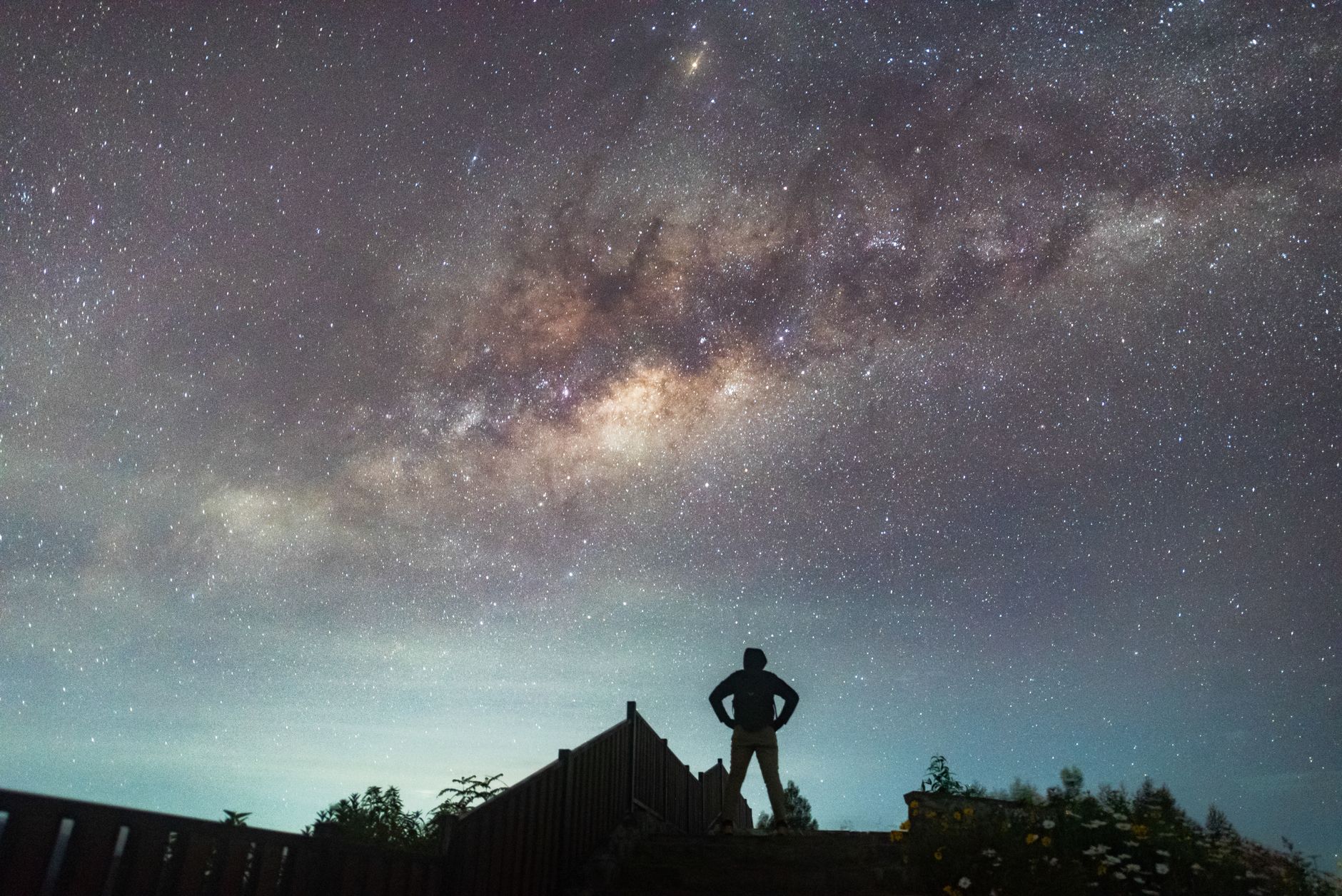
Beyond physics, a sociological divide is emerging. There is a tension between the vision of space as the "common heritage of mankind" and its reality as a playground for the ultra-wealthy. This extends to the lunar surface, where the 1967 Outer Space Treaty forbids national appropriation of celestial bodies [5]. However, the Artemis Accords introduce "safety zones" around lunar bases, which could function as de facto property rights for private companies claiming water ice at the lunar south pole. We are essentially drafting a new maritime law for the stars.
The Future of Galactic Logistics
The most expensive part of any space journey is the struggle to leave Earth's gravity. To overcome this "gravity well," the Moon is being reimagined as a logistics hub. By extracting water ice from permanently shadowed regions and using electrolysis to split it into hydrogen and oxygen, we can create rocket fuel in situ. This transforms the Moon into a galactic fueling station, allowing ships to refuel in low gravity before venturing deeper into the solar system.
This infrastructure enables a broader vision: humanity as a multi-planetary species. Establishing a self-sustaining colony on Mars requires a shift from open-loop systems, where supplies are shipped from Earth, to closed-loop bioregenerative life support that recycles air and water with near-perfect efficiency. Simultaneously, orbital mechanics could be applied to terrestrial logistics through "point-to-point" Earth travel, reducing a flight from New York to Tokyo to under an hour by exiting and re-entering the atmosphere.
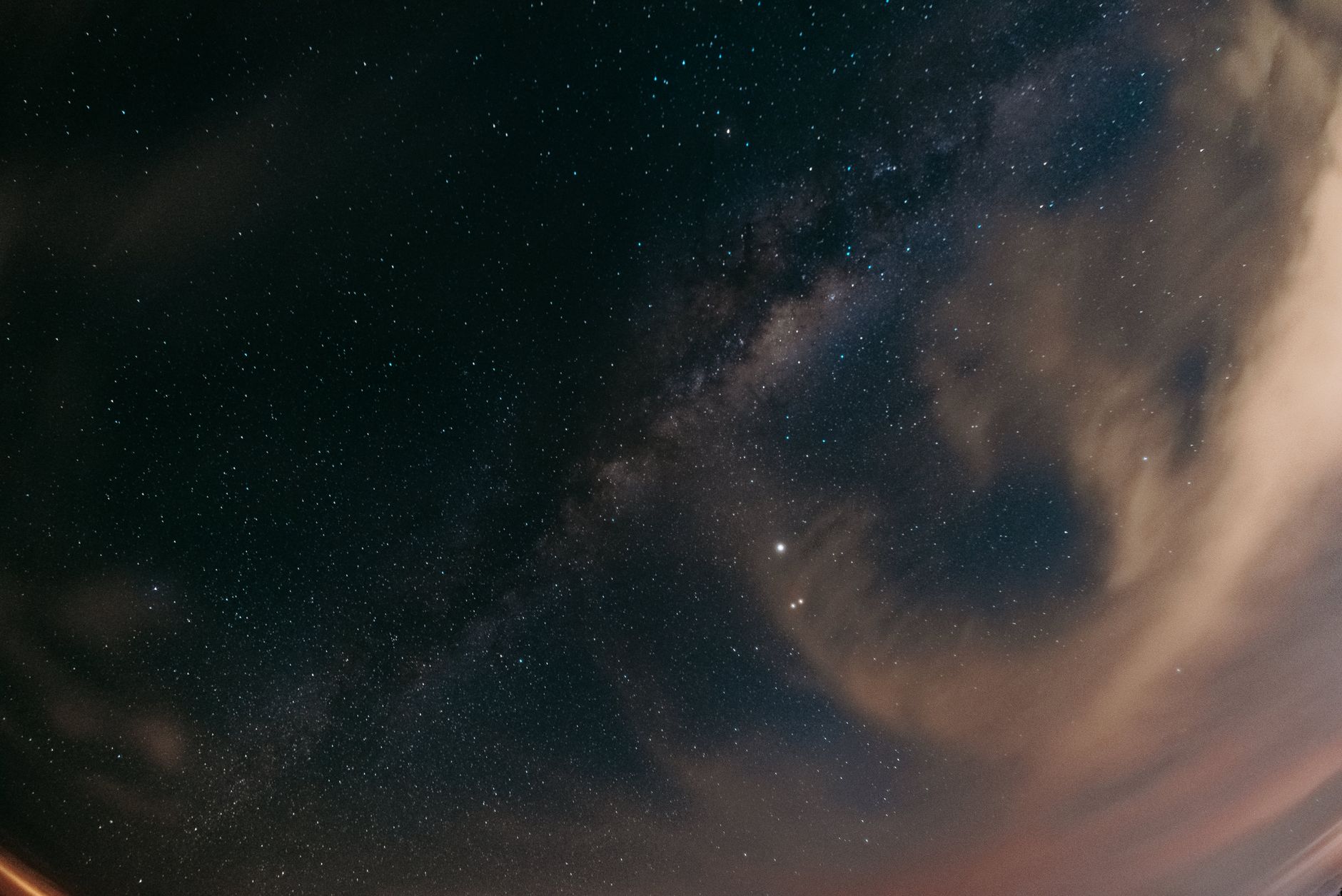
Supporting this scale of expansion requires asteroid mining for platinum-group metals and silicates, allowing us to build massive structures in space rather than launching them from Earth. As we push further from the sun, the speed of light becomes a communication bottleneck. With signals taking twenty minutes to reach Mars, real-time control is impossible, necessitating advanced AI for autonomous navigation and emergency response. Through these innovations, the solar system is slowly becoming a neighborhood.
Conclusion
The transition of space from a government frontier to a commercial destination is not merely a change in funding, but a shift in fundamental philosophy. By replacing "zero-failure" bureaucracy with iterative engineering and mastering the economics of reusability, we have turned the vacuum of space into a reachable itinerary. While significant hurdles remain—ranging from the Kessler Syndrome to the legal ambiguities of lunar property rights—the trajectory is clear. Space is no longer a mystery to be contemplated, but a logistics challenge to be solved. The "thin blue line" of our atmosphere is no longer a ceiling, but a threshold.
References
- Fédération Aéronautique Internationale (FAI), "The Kármán Line," official definition of the boundary of space.
- SpaceX, "Falcon 9 User's Guide," technical specifications on vertical landing and reusability.
- NASA, "Sabatier Reaction for In-Situ Resource Utilization," research on methane production.
- D. J. Kessler, "Collision Frequency of Artificial Satellites: The Creation of a Debris Belt," Journal of Geophysical Research, 1978.
- United Nations Office for Outer Space Affairs (UNOOSA), "Treaty on Principles Governing the Activities of States in the Exploration and Use of Outer Space, including the Moon and Other Celestial Bodies," 1967.

I'm Viktor Mikhailov from Russia. After 18 years working across topics related to science communicator explaining physics, astronomy, and space exploration in clear, accessible language., I’ve discovered that the best writing comes from empathy, clarity, and a genuine desire to connect.