
Editor's brief
Legal milestones provide a shield against the state, but they don't automatically erase social stigma or systemic exclusion. True equality requires moving beyond the gender binary and addressing intersectional barriers to ensure the most marginalized individuals experience actual belonging.
#LGBTQ+ rights
#Social justice
#Intersectionality
#Legal equality
For much of the twentieth century, the struggle for LGBTQ+ equality occurred not in courtrooms or legislative assemblies, but in dimly lit basements and private apartments. These clandestine networks were not seeking political victory; they were seeking basic survival. In these spaces, marginalized individuals realized that their isolation was not a personal failure but a systemic imposition. This shift—from shame to identity—established the fundamental premise that the right to exist authentically is a human right, not a privilege granted by the state. However, the journey from hidden enclaves to universal legal protection is not a linear path of progress, but a complex negotiation between law, culture, and power. The Friction of Visibility The transition from secret gatherings to the public square was born of friction. The 1969 Stonewall riots in New York City were a tipping point where the exhaustion of enduring police harassment transformed into a collective demand for visibility. This signaled a shift in strategy: moving from the "homophile" approach of the 1950s—which sought acceptance through assimilation and quiet respectability—to a movement of liberation. Public pride parades emerged as political assertions of presence, forcing society to acknowledge a demographic that had been systematically erased from history and law. This visibility was sustained by grassroots organizing. Legal victories are rarely the result of a sudden change of heart by legislators; they are...
For much of the twentieth century, the struggle for LGBTQ+ equality occurred not in courtrooms or legislative assemblies, but in dimly lit basements and private apartments. These clandestine networks were not seeking political victory; they were seeking basic survival. In these spaces, marginalized individuals realized that their isolation was not a personal failure but a systemic imposition. This shift—from shame to identity—established the fundamental premise that the right to exist authentically is a human right, not a privilege granted by the state. However, the journey from hidden enclaves to universal legal protection is not a linear path of progress, but a complex negotiation between law, culture, and power.
The Friction of Visibility
The transition from secret gatherings to the public square was born of friction. The 1969 Stonewall riots in New York City were a tipping point where the exhaustion of enduring police harassment transformed into a collective demand for visibility. This signaled a shift in strategy: moving from the "homophile" approach of the 1950s—which sought acceptance through assimilation and quiet respectability—to a movement of liberation. Public pride parades emerged as political assertions of presence, forcing society to acknowledge a demographic that had been systematically erased from history and law.

This visibility was sustained by grassroots organizing. Legal victories are rarely the result of a sudden change of heart by legislators; they are the product of relentless ground-level pressure. Local chapters and community centers shifted the "Overton Window"—the range of policies acceptable to the mainstream population. As activists destigmatized these identities, the judiciary and legislature found the political will to codify protections. This process was accelerated by media representation. As queer narratives transitioned from tragic tropes to complex portrayals, the "contact hypothesis" took effect: prejudice decreased as the public began seeing queer stories that mirrored their own experiences of family, grief, and ambition.
The Shadow of Colonial Legacies
One of the most jarring contradictions in global governance is the persistence of colonial-era statutes that continue to police 21st-century identities. Across the Commonwealth, British Victorian-era "unnatural offenses" laws were imported to regulate morality. In India, Section 377 criminalized consensual same-sex acts for over a century until the Supreme Court struck it down in 2018 [1]. While a landmark victory, decriminalization is a "negative right"—the right not to be imprisoned—rather than a "positive right" that affirms a person's dignity.

In jurisdictions such as Iran or Saudi Arabia, where blasphemy laws overlap with morality codes, state-sanctioned executions remain a reality. This institutionalized violence creates desperate migration patterns, forcing LGBTQ+ individuals to seek asylum in the Global North. These asylum seekers often face a secondary struggle: proving their identity to immigration officers who rely on rigid, outdated stereotypes to determine eligibility for protection. This underscores a critical gap in global safety, where the right to life depends on one's ability to navigate a biased bureaucratic process.
From De Jure to De Facto Equality
True legal equity requires moving beyond the absence of punishment toward the active recognition of diverse family structures. Marriage equality, while often framed symbolically, serves a pragmatic function by granting access to inheritance rights, joint insurance, and hospital visitation. When Taiwan became the first Asian jurisdiction to legalize same-sex marriage in 2019, it provided a structural validation of queer kinship in a region where traditional family values often marginalize non-traditional households [2].

However, a marriage license does not shield an individual from the systemic exclusions of the private market. A wide gap often exists between de jure equality—what the law says on paper—and de facto equality—how life is actually lived. Without comprehensive anti-discrimination statutes protecting housing and employment, queer individuals remain vulnerable to "quiet" prejudices. A person may be legally allowed to marry, yet still be denied a rental apartment or passed over for a promotion. Effective protection requires legislation that empowers citizens to hold private actors accountable through labor boards or human rights commissions.
Dismantling the Gender Binary
For transgender and non-binary individuals, the struggle is often a battle against administrative hurdles. For decades, the requirement for a psychiatric diagnosis or surgical intervention to change a legal gender marker treated identity as a medical pathology. Argentina’s Gender Identity Law of 2012 set a global precedent by introducing the principle of self-determination, allowing individuals to rectify identity documents without medical requirements [3]. This recognizes that gender is an internal experience rather than a condition to be verified by a doctor.

Much of the early legal momentum for LGBTQ+ rights focused on "same-sex" partnerships, a framework that inherently assumes a gender binary. For non-binary and gender-fluid individuals, marriage equality does little to resolve the friction of navigating healthcare systems and employment registries that demand a choice between "male" or "female." Their struggle is not just for the right to love, but for the right to exist outside a binary system that refuses to recognize their identity.
The Intersectional Reality of Oppression
Equality is not experienced uniformly. When speaking of "the community," there is a risk of centering the experiences of those with the most social capital—typically white, cisgender, middle-class individuals. Intersectionality, a framework coined by Kimberlé Crenshaw, recognizes that oppression is not monolithic [4]. For a person occupying multiple marginalized identities, discrimination does not simply add up—it multiplies.
In the Indian context, this is complicated by caste. A Dalit queer individual faces both homophobia and the ancestral weight of caste-based exclusion, which can make traditional support networks inaccessible. Similarly, socioeconomic status acts as a buffer; those with financial means can access private healthcare or move to safer neighborhoods, while for those in poverty, the "right" to be out is a luxury they cannot afford. If a community center is not wheelchair accessible or mental health services are not equipped for neurodivergence, the promise of inclusion remains theoretical.
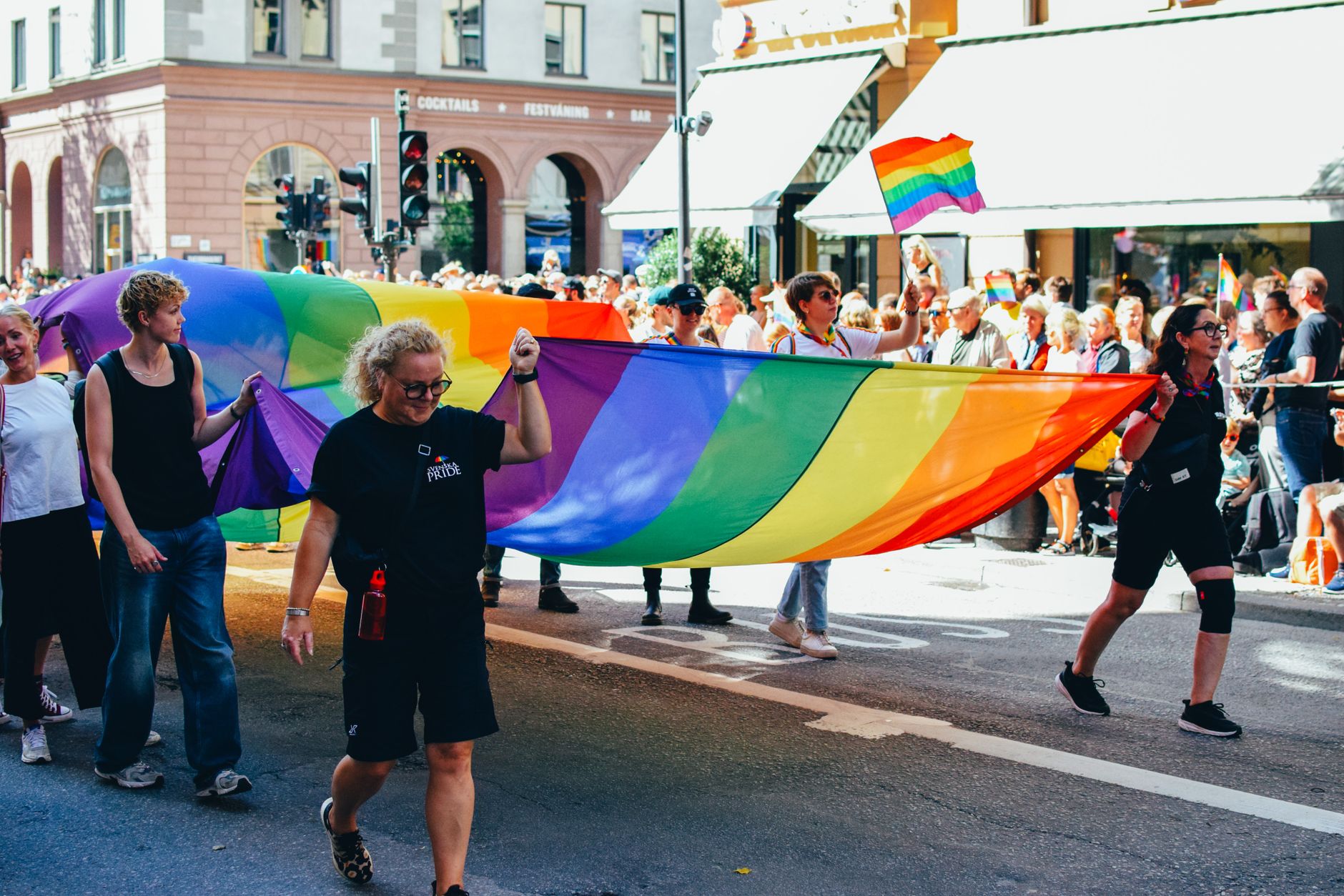
Meaningful policy reform must prioritize those at the "margins of the margins." When advocacy is designed to protect the most vulnerable—the transgender woman of color, the disabled queer youth, the impoverished migrant—the resulting protections naturally extend to everyone else. Inclusive advocacy is not about dividing the movement, but about acknowledging that until the most marginalized are safe, equality has not been achieved.
The Gap Between Courtrooms and Dinner Tables
The distance between a legal victory and a dinner table conversation is often vast. Legality provides a shield against the state, but it does not automatically dismantle internalized shame or social ostracization. Familial rejection remains an acute point of failure. When a young person is cast out, the trauma is material; displacement pushes LGBTQ+ youth into precarious housing and cycles of poverty that persist long after they have left the family home.

This vulnerability extends into healthcare, where providers often operate from a rigid, binary understanding of biology. When medical training ignores the specific needs of queer bodies, the resulting disparities are about more than access—they are about the indignity of being misunderstood by those tasked with one's care. This is rooted in an educational vacuum. Prejudice thrives when gender and sexuality are treated as taboos or "Western imports." Progress happens when education shifts toward a broader understanding of sociology and human rights, recognizing that diversity is a factual reality of the human condition.
It is also a mistake to view this struggle as a movement exported from the Global North. In South Asia, the historical presence of the Hijra community demonstrates that gender variance has deep, indigenous roots that predated colonial intervention. Recognizing these nuances prevents the erasure of local histories and ensures that the pursuit of rights does not become another form of cultural imposition.
Sustaining the Progress
The fragility of a court ruling is often mistaken for the permanence of a right. History shows that rights granted in one era can be eroded through judicial reversals or political volatility. Equality is not a destination, but a continuous practice of defense and expansion. This requires a transition in how we perceive allyship. Support cannot be performative—characterized by rainbow logos or silent agreement. Meaningful advocacy happens in mundane spaces: the dinner table where a relative’s prejudice is challenged, or the office where a colleague’s misgendering is corrected in real-time.
Similarly, the corporate world must move beyond diversity quotas. Many organizations treat inclusion as a metric for a corporate social responsibility report, leading to "tokenism" where a few visible individuals shield the company from criticism while the underlying culture remains rigid. Genuine belonging occurs when internal structures—from healthcare benefits for gender-affirming care to psychological safety—are designed for the most vulnerable employee. A culture of belonging is created by leadership that values authenticity over assimilation.
Conclusion
The journey toward LGBTQ+ equality has moved from the necessity of survival in hidden spaces to the pursuit of systemic equity in the public square. While legal milestones like the decriminalization of Section 377 or the legalization of same-sex marriage are vital, they are only the beginning. The true measure of progress is not found in the text of a law, but in the lived experience of the most marginalized members of the community.
To move beyond tolerance toward active inclusion, the burden of education must shift. The marginalized should not be the sole architects of their own liberation. By challenging prejudice in private spaces, demanding inclusive curricula in schools, and prioritizing the needs of those at the intersection of multiple oppressions, society can move from a state of passive tolerance to one of active, structural belonging.
References
- Supreme Court of India, Navtej Singh Johar & Ors. v. Union of India, 2018.
- Judicial Yuan, Interpretation No. 748, Taiwan, 2017 (implemented 2019).
- Government of Argentina, Law 26.743: Gender Identity Law, 2012.
- Crenshaw, K., "Demarginalizing the Intersection of Race and Sex," University of Chicago Legal Forum, 1989.
- European Court of Human Rights, Case-law on LGBTQ+ Rights and Family Life.

I'm Priya Sharma. I never imagined that my studies in Political Science would lead me here, but 13 years later, writing about politics and society analyst examining how laws, power structures, and history shape inequality, rights, and everyday life. has become my way of making sense of the world—and helping others do the same.