
Editor's brief
High-speed internet is often treated as a luxury, leaving underserved communities trapped by digital redlining. True equity requires more than just cables in the street; it demands affordable devices and digital literacy to unlock economic, educational, and health opportunities for all.
#Digital Equity
#Broadband Access
#Digital Inclusion
#Public Policy
For many students in underserved districts, the school day does not end at the bell; it transitions into a search for a public Wi-Fi signal in a library parking lot or a fast-food restaurant. This disparity is not a result of individual deficiency, but a symptom of a structural void where high-speed internet is treated as a luxury rather than a foundational utility. For policymakers, bridging this gap requires moving beyond the narrow goal of broadband penetration toward a more rigorous pursuit of digital equity, ensuring that connectivity translates into tangible social and economic mobility. Defining the Spectrum of Digital Inequality To implement effective solutions, policymakers must distinguish between the "digital divide" and "digital equity." The digital divide describes the gap between those with access to modern information and communication technology and those without, encompassing disparities in hardware, connectivity, and basic skills [1]. Digital equity, by contrast, is the state in which all individuals and communities possess the information technology capacity necessary for full participation in democracy, the economy, and society [2], [3]. The operational mechanism used to achieve this state is digital inclusion. This requires a coordinated strategy focusing on three pillars: the provision of reliable broadband, the distribution of internet-enabled devices, and the implementation of digital literacy training [1]. Without all three, the divide persists even a...
For many students in underserved districts, the school day does not end at the bell; it transitions into a search for a public Wi-Fi signal in a library parking lot or a fast-food restaurant. This disparity is not a result of individual deficiency, but a symptom of a structural void where high-speed internet is treated as a luxury rather than a foundational utility. For policymakers, bridging this gap requires moving beyond the narrow goal of broadband penetration toward a more rigorous pursuit of digital equity, ensuring that connectivity translates into tangible social and economic mobility.
Defining the Spectrum of Digital Inequality
To implement effective solutions, policymakers must distinguish between the "digital divide" and "digital equity." The digital divide describes the gap between those with access to modern information and communication technology and those without, encompassing disparities in hardware, connectivity, and basic skills [1]. Digital equity, by contrast, is the state in which all individuals and communities possess the information technology capacity necessary for full participation in democracy, the economy, and society [2], [3].
The operational mechanism used to achieve this state is digital inclusion. This requires a coordinated strategy focusing on three pillars: the provision of reliable broadband, the distribution of internet-enabled devices, and the implementation of digital literacy training [1]. Without all three, the divide persists even after the physical infrastructure is installed.

A critical boundary exists between broadband access and digital equity. Access is the physical presence of infrastructure—the "pipe" reaching a neighborhood. Equity is the meaningful ability of a resident to use that infrastructure to improve their life outcomes [3]. This distinction suggests that infrastructure is a prerequisite, but not a guarantee, of equity. True adoption occurs only when a user has daily access to the internet at a speed and quality necessary for modern tasks, utilizing a personal device and possessing the required digital skills [1]. Providing a connection without providing a laptop or the knowledge to navigate a portal is an incomplete policy response.
The Anatomy of the Gap: Systemic Barriers to Connectivity
The persistence of the digital divide is often driven by "digital redlining," a practice where internet service providers (ISPs) under-invest in fiber broadband infrastructure in lower-income or rural areas. By bypassing neighborhoods deemed less profitable, ISPs create geographic pockets of exclusion that mirror historical patterns of systemic disinvestment.
This exclusion is maintained through four interdependent barriers:
- Availability: The physical existence of infrastructure in a given area.
- Adequacy: Whether speeds meet modern demands, such as those required for telehealth or high-definition educational video.
- Affordability: The cost of service relative to the household income.
- Acceptability: Whether the tools are culturally informed, linguistically accessible, and usable by the target population.
Even when availability is addressed, a "device quality gap" remains. Evidence indicates that "smartphone-only" access severely limits a user's ability to perform complex tasks—such as filing job applications, managing healthcare portals, or developing professional digital skills—compared to those with high-functioning computers [4]. This suggests that mobile-first connectivity often acts as a facade of access that masks a deeper lack of functional utility.

Socio-economic drivers, including the intersection of race, income, and age, further exacerbate these gaps. Notably, low-income urban households often experience higher rates of disconnection than rural residents, despite being physically closer to fiber-optic hubs. This indicates that affordability and systemic neglect are often more potent barriers than geography.
The Cost of Exclusion: Systemic Impacts on Opportunity
The absence of reliable broadband functions as a "super" social determinant of health. When communities lack connectivity, they are excluded from remote patient monitoring, telepharmacy, and "hospital-at-home" services, which directly impacts life expectancy and the quality of chronic disease management in digitally isolated areas [5].
In education, this manifests as the "homework gap," where students in underserved populations face achievement disparities because they cannot complete assignments or engage in personalized, internet-based learning at home [6]. This creates a compounding disadvantage; students without digital resources fall further behind in a curriculum that increasingly assumes those resources are ubiquitous.

Economic mobility is similarly stifled. Modern workforce readiness requires not only the ability to search for jobs online but the capacity for remote work and ongoing digital upskilling [7]. Those without high-speed access are effectively locked out of the modern labor market's most flexible and high-paying opportunities.
Finally, the lack of digital capacity leads to civic marginalization. As government services, voting information, and community engagement platforms migrate online, those on the wrong side of the divide are denied full participation in democracy and an equitable share of public resources [6]. This suggests that digital inequality is not merely a technical inconvenience but a fundamental threat to civic agency.
Policy Interventions: Infrastructure and Adoption Strategies
Current federal efforts in the U.S. attempt to address both the hardware and human elements of the divide. The Broadband Equity, Access, and Deployment (BEAD) program is a $42.45 billion grant initiative that prioritizes "fiber-to-the-premises" to connect unserved and underserved locations [8]. By prioritizing fiber, the program seeks long-term durability over temporary fixes.
To complement the infrastructure of BEAD, the Digital Equity Act (DEA) focuses on the "human" side of the divide. It provides funding for digital inclusion practitioners, the distribution of devices, and comprehensive literacy training [9]. This dual-track approach recognizes that a cable in the street is useless if the resident cannot afford the monthly bill or does not know how to use a browser.
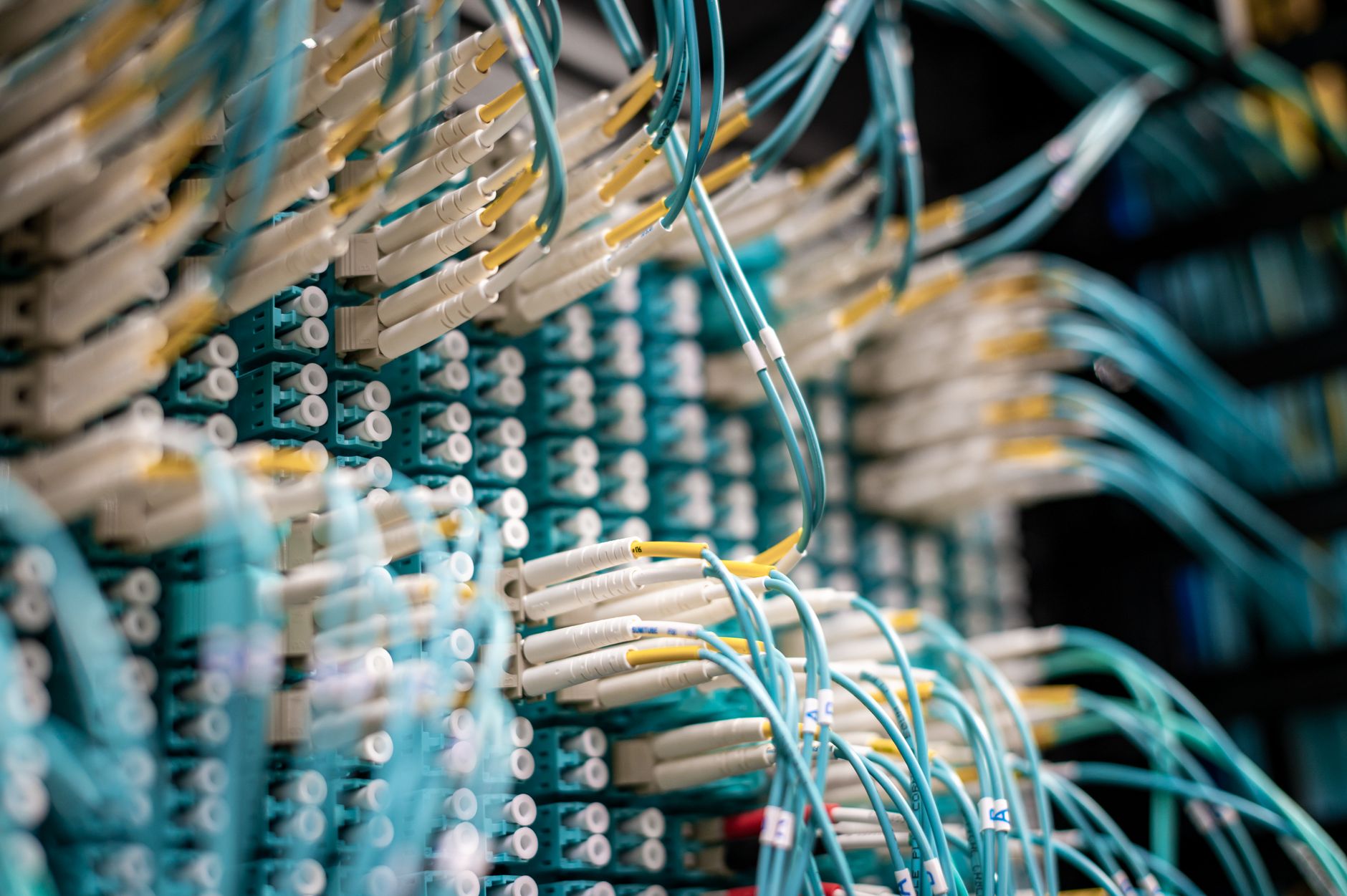
In geographies where fiber is cost-prohibitive, alternative connectivity models are essential. These include community-owned broadband networks, localized wireless mesh networks, and Low Earth Orbit (LEO) satellites, which can reach the most remote regions [10]. Additionally, affordability subsidies must be modernized; programs like Lifeline require reform to ensure monthly benefits reflect the actual cost of reliable, high-speed service for families living paycheck-to-paycheck [9].
Implementation Challenges and Future Limitations
Despite significant funding, several systemic hurdles threaten the efficacy of these policies. A primary limitation is the "mapping accuracy problem." The FCC National Broadband Map has been criticized for over-reporting service availability, which can lead to the misallocation of BEAD funds and the continued exclusion of "invisible" underserved pockets [11]. When the map indicates a home is "covered" but the resident has no signal, the policy mechanism fails.
There is also a tension between "fiber-first" strategies and "technology-neutral" approaches. While fiber offers superior longevity and speed, technology-neutral policies allow for faster, lower-cost deployment via fixed wireless or satellite [11]. The trade-off is a choice between immediate, basic connectivity for all and long-term, high-performance infrastructure for some.
Legal and regulatory volatility further complicate the landscape. Recent judicial rulings have questioned the constitutionality of using race-based criteria to define underserved populations within the DEA [12]. Such rulings may force a shift toward purely income-based metrics, potentially overlooking the specific historical legacies of digital redlining.
Finally, policymakers must avoid the "sustainability trap." Many connectivity initiatives rely on one-time grants, which create temporary access without providing for the long-term maintenance of devices or ongoing digital literacy support [12]. Without sustainable funding models, the digital divide may simply shift from a problem of initial access to a problem of permanent obsolescence.
References
- Digital Inclusion Coalition, 'Learning the Terms,' Digital Inclusion Coalition, 2024. View source.
- SETDA, 'Digital Equity,' State Exchange for Telecom Development Association, 2024. View source.
- NTIA, 'Digital Equity,' National Telecommunications and Information Administration, 2024. View source.
- Give It Get It, 'Beyond Internet Access: The Device Gap,' Give It Get It, 2024. View source.
- Benton Institute for Broadband & Society, 'Bridging the Broadband Health Gap,' Benton Institute, 2023. View source.
- All4Ed, 'Digital Equity: Access and Opportunity,' All4Ed, 2023. View source.
- National Council on Family Relations, 'Reducing the Digital Divide for Families,' NCFR, 2024. View source.
- NTIA, 'Broadband Equity, Access, and Deployment (BEAD) Program,' National Telecommunications and Information Administration, 2024. View source.
- Digital Inclusion Coalition, 'Policy Priorities for Digital Equity,' Digital Inclusion Coalition, 2024. View source.
- Mission Broadband, 'Challenges Facing the BEAD Program,' Mission Broadband, 2024. View source.
- Competitive Enterprise Institute, 'BEAD and the Cost of Conditions,' CEI, 2024. View source.
- Brookings Institution, 'Cutting Race Considerations from the Digital Equity Act,' Brookings, 2024. View source.

I'm Priya Sharma. I never imagined that my studies in Political Science would lead me here, but 13 years later, writing about politics and society analyst examining how laws, power structures, and history shape inequality, rights, and everyday life. has become my way of making sense of the world—and helping others do the same.