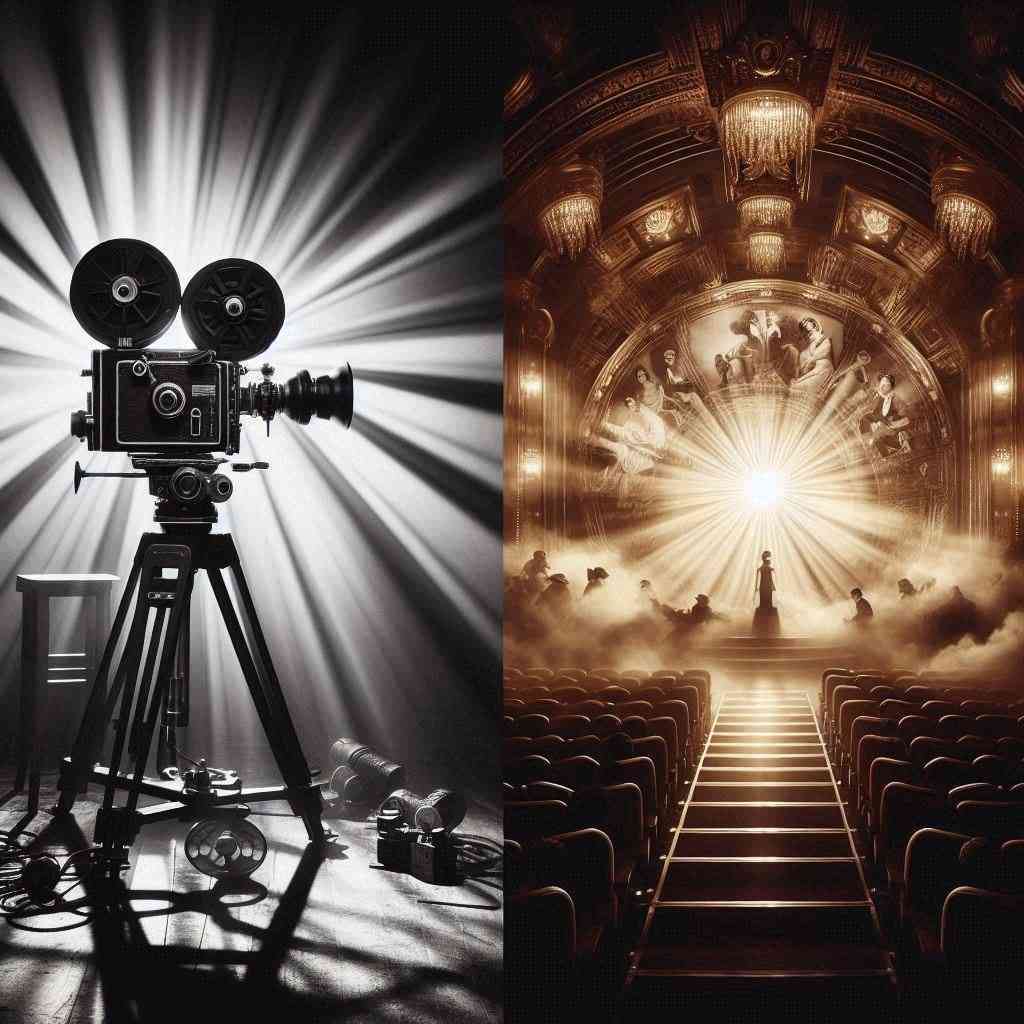
Editor's brief
A-list fame often masks a chaotic reality of sleep deprivation, wardrobe malfunctions, and eccentric method acting. The polished image of the enigmatic icon hides a human struggle for invisibility and the endurance required to turn production mayhem into cinematic authenticity.
#Cinema
#Acting
#Celebrity Culture
#Film Production
Most celebrity interviews are sanitized affairs, conducted in hotel suites that smell vaguely of industrial lemon cleaner and desperation, where every answer is pre-approved by a phalanx of publicists. This encounter, however, began with a door swinging open far too quickly and a man stumbling in with a coffee the size of a small bucket and a look of genuine disorientation. There is a specific, magnetic gravity that A-list movie stars carry—a weight of presence that usually commands a room—but here, that gravity was delightfully undercut by a man who had clearly just lost a battle with a cardboard beverage carrier. It was the perfect introduction to a star whose public persona is built on mystery, but whose reality is far more human, clumsy, and wonderfully absurd. The Myth of the Enigmatic Icon In the industry, "enigmatic" is often deployed as a strategic tool. Publicists use it to create a vacuum of mystery that the public fills with their own fantasies. But as we settled in, it became apparent that being enigmatic is frequently a polite euphemism for being overwhelmed by a digital calendar. The perceived mystery isn't always a curated choice; sometimes, it is simply the result of a star who is confused by their own itinerary and hoping no one notices they are fifteen minutes late to a room they didn't know existed. This disorientation is a byproduct of the modern press junket, a grueling ritual of repetition and sleep deprivation. We spent a few minutes dissecting the surr...
Most celebrity interviews are sanitized affairs, conducted in hotel suites that smell vaguely of industrial lemon cleaner and desperation, where every answer is pre-approved by a phalanx of publicists. This encounter, however, began with a door swinging open far too quickly and a man stumbling in with a coffee the size of a small bucket and a look of genuine disorientation. There is a specific, magnetic gravity that A-list movie stars carry—a weight of presence that usually commands a room—but here, that gravity was delightfully undercut by a man who had clearly just lost a battle with a cardboard beverage carrier. It was the perfect introduction to a star whose public persona is built on mystery, but whose reality is far more human, clumsy, and wonderfully absurd.
The Myth of the Enigmatic Icon
In the industry, "enigmatic" is often deployed as a strategic tool. Publicists use it to create a vacuum of mystery that the public fills with their own fantasies. But as we settled in, it became apparent that being enigmatic is frequently a polite euphemism for being overwhelmed by a digital calendar. The perceived mystery isn't always a curated choice; sometimes, it is simply the result of a star who is confused by their own itinerary and hoping no one notices they are fifteen minutes late to a room they didn't know existed.

This disorientation is a byproduct of the modern press junket, a grueling ritual of repetition and sleep deprivation. We spent a few minutes dissecting the surreal logistics of the tour—the rhythm of waking up at 4:00 AM for hair and makeup, only to spend twelve hours repeating the same three anecdotes to a rotating door of journalists. This extends to the red carpet, which is framed as a victory lap but is often an exercise in endurance. He recounted the quiet terror of walking a hundred yards in front of a thousand flashing bulbs while wearing shoes two sizes too small. It is a perfect metaphor for the celebrity experience: the world sees a seamless image of perfection, while the person inside is simply trying to survive the next ten minutes without their toes curling in agony.
The Physicality of the Method
Method acting often looks like a spiritual journey from the outside, but in practice, it can lean toward the bizarre. When discussing preparation for his latest role, the star confessed to psychological deep-dives that sound more like performance art than professional training, including a week spent pretending to be a disgruntled toaster to embody a specific kind of repressed, simmering frustration. This is a modern extension of the Stanislavski system, where the goal is to find a physical or situational equivalent that triggers a genuine visceral response.
However, the most grueling part of the process is often the most mundane: the wardrobe. The emotional weight of a character is far easier to carry than the actual weight of a velvet cape worn for ten hours a day. There is a practical physics to acting that often goes ignored; a heavy garment changes how a person breathes and moves. When an actor is sweating under pounds of fabric under scorching studio lights, the irritability seen on screen isn't always a creative choice—sometimes it is just the reality of the costume.

To bridge the gap between physical misery and emotional truth, the star relies on olfactory anchors. By using a specific scent, they can trigger a character's mood instantly. This leverages the way the olfactory bulb is directly connected to the amygdala and hippocampus, the brain regions that handle emotion and memory [1]. A single whiff of a certain scent can bypass the conscious mind and plunge an actor straight into a state of panic or longing, providing a shortcut to authenticity in a crowded room.
The Architecture of a Scene
Cinema is essentially a high-budget exercise in pretending that everything is under control. We see a seamless sequence of events, but the reality of a film set is often a frantic scramble. Some of the most iconic moments in the film weren't the result of meticulous storyboarding, but were instead "beautiful accidents" born from absolute mayhem. For instance, a regal costume piece completely disintegrated during a high-tension scene. Rather than calling a wrap, the director kept the take, realizing the genuine bewilderment on the star's face was more valuable than a pristine outfit. It is a reminder that perfection is often the enemy of authenticity.

This authenticity is further refined through the invisible architecture of pacing. We discussed the power of the "beat," specifically the idea that a well-timed silence is often louder than a scream. By letting a moment breathe, the filmmaker creates a vacuum that the audience must fill with their own anxiety or empathy. This tension was mirrored in the film's visual language, which avoided perfect symmetry in favor of off-center framing and unsettling focal lengths. This technique, reminiscent of early New Wave directors, ensures the audience feels the character's internal instability.
The commitment to this truth even led to the decision to gut the original ending. The initial draft leaned toward a traditional, optimistic resolution, but it was scrapped after the realization that such a pivot felt unearned. For this character, a happy ending would have been a lie. By opting for an ambiguous, haunting conclusion, the film respects the character's trajectory rather than forcing a palatable closure for the audience.
Survival and the Price of Visibility
Beyond the craft, there is the jarring vertigo of fame. The star laughed about the absurdity of being recognized in a grocery store while wearing mismatched pajamas, but there was an underlying exhaustion in the tone. The modern celebrity experience is a strange friction: the world demands total accessibility while the human being behind the image is desperate for invisibility. Privacy stops being a right and becomes a luxury commodity, turning the mundane into the athletic. Avoiding paparazzi requires a level of physical agility that would put Olympic sprinters to shame, transforming hotel lobbies into tactical obstacle courses.

To survive this, the star has adopted a strategy of "aggressive boredom." Sanity is found in hobbies that are completely unmarketable—activities so niche that no publicist could spin them into a lifestyle brand. Whether it is obsessive stamp collecting or studying ancient irrigation systems, these pursuits provide a space where they aren't a brand, but simply a person failing at a hobby. It is a necessary psychological anchor in an industry that commodifies every aspect of a person's existence, from their political views to their skincare routine—the latter being a pragmatic necessity in the 4K era, where high-definition cameras capture every misplaced pore.
Conclusion
As our conversation wrapped up, the star confessed a humbling defeat: despite conquering complex characters and global fame, they still cannot figure out how to use a PDF properly. It was the perfect closing note, a reminder that the "shimmering icon" is a construction of light, editing, and a lot of very expensive makeup. The real magic of cinema doesn't live in the polished final product, but in the gap between the cinematic lie and the muddy, shivering, exhausted truth of the production.

The practical takeaway for any viewer is to look past the gloss. When we see a powerhouse performance, we aren't just seeing talent; we are seeing a triumph of human endurance over chaos. Cinema is the ultimate empathy machine, allowing us to occupy a stranger's headspace and live a thousand lives. The next time you are moved by a quiet scene on screen, remember that it was likely born from a state of total absurdity—and that the actor was probably just praying for a zipper that actually works.
References
- "The Olfactory System," National Institutes of Health (NIH), National Library of Medicine.

Hi, I'm Amelia Reyes. My work is influenced by my time in Film Studies and my experiences living in Philippines. After 8 years in this space, I focus on exploring entertainment critic through a human-centered lens.