Editor's brief
This article explores how to balance sophisticated interior design with essential pet-safety needs. From choosing durable, low-allergen flooring and performance fabrics to creating vertical spaces for cats and orthopedic retreats for dogs, learn actionable strategies to build a secure, healthy, and stylish home for your animal companions.
#Pet Safety
#Interior Design
#Home Decor
Creating a home that is both aesthetically pleasing and safe for our animal companions is more than a design challenge; it is a fundamental act of animal welfare. As someone who has spent years in the field of veterinary science, I have observed that our domestic spaces often harbor hidden risks that can impact a pet’s long-term health. By adopting a thoughtful, pet-centered approach to interior design, you can transform your living space into a secure sanctuary that supports your pet’s physical health and mental well-being, proving that style and pet safety can indeed exist in perfect harmony. Laying the Foundation with Pet-Safe Flooring The foundation of a pet-friendly home starts underfoot. Choosing the right flooring is a vital decision that affects your pet’s orthopedic health and your home's hygiene. High-quality luxury vinyl plank (LVP) and porcelain tile are the gold standards for pet-safe home materials because they are remarkably resistant to moisture and claw scratches [1]. Unlike hardwood, these surfaces do not harbor allergens or trapped bacteria, which is particularly beneficial for pets with sensitive skin. Beyond durability, traction is essential for joint health; slick surfaces can cause repetitive micro-trauma to a pet's hips and knees. To mitigate this, incorporate high-quality rubber-backed area rugs in high-traffic zones to prevent slips during active play. Furthermore, when refinishing surfaces, always prioritize low-VOC finishes to ensure your pet is no...
Creating a home that is both aesthetically pleasing and safe for our animal companions is more than a design challenge; it is a fundamental act of animal welfare. As someone who has spent years in the field of veterinary science, I have observed that our domestic spaces often harbor hidden risks that can impact a pet’s long-term health. By adopting a thoughtful, pet-centered approach to interior design, you can transform your living space into a secure sanctuary that supports your pet’s physical health and mental well-being, proving that style and pet safety can indeed exist in perfect harmony.
Laying the Foundation with Pet-Safe Flooring
The foundation of a pet-friendly home starts underfoot. Choosing the right flooring is a vital decision that affects your pet’s orthopedic health and your home's hygiene. High-quality luxury vinyl plank (LVP) and porcelain tile are the gold standards for pet-safe home materials because they are remarkably resistant to moisture and claw scratches [1]. Unlike hardwood, these surfaces do not harbor allergens or trapped bacteria, which is particularly beneficial for pets with sensitive skin. Beyond durability, traction is essential for joint health; slick surfaces can cause repetitive micro-trauma to a pet's hips and knees. To mitigate this, incorporate high-quality rubber-backed area rugs in high-traffic zones to prevent slips during active play. Furthermore, when refinishing surfaces, always prioritize low-VOC finishes to ensure your pet is not inhaling harmful toxins at their ground-level perspective [2].
Selecting Durable and Stylish Furnishings
Balancing high-end aesthetics with the reality of living with animals requires a focus on material integrity. Performance fabrics, such as tightly woven microfiber or heavy-duty canvas, are essential for pet-friendly interior design as they resist snagging and are easier to clean. To manage shedding, consider color palettes that coordinate with your pet’s fur, as this helps minimize the visual impact of daily molting. Additionally, prioritize solid wood furniture over fragile veneers, as solid wood is far more resistant to damage and can often be refinished if scratched. Proactive safety is equally important; hide loose electrical cords behind furniture or use cable organizers to prevent the life-threatening risk of ingestion or electrical burns [3].
Designing Elevated Spaces for Cats
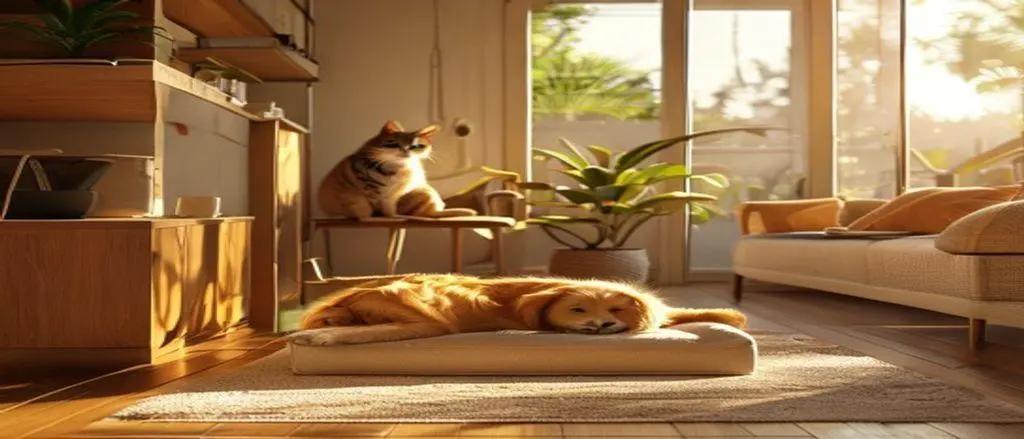
Domestic cats are biologically "vertical" creatures who view height as a primary source of security and environmental control. Providing elevated pathways, such as wall-mounted shelves or perches, allows your cat to survey their domain, which significantly reduces territorial anxiety and stress-induced behavioral issues [4]. Incorporate window hammocks to facilitate the natural instinct of sunbathing, which provides both physical warmth and essential mental stimulation. Furthermore, ensure these pathways lead to private "safe havens," such as enclosed cubbies, where a cat can retreat if they feel overwhelmed. When selecting greenery, always verify that your plants are non-toxic, opting for cat-friendly alternatives like spider plants to avoid accidental poisoning [5].
Crafting the Perfect Dog-Friendly Decor
Designing for dogs centers on creating a "sanctuary" space where they can decompress. A dedicated, quiet corner equipped with a high-quality orthopedic bed is vital, particularly for senior dogs struggling with mobility issues. Beyond resting spots, organization is key; using natural, durable materials like seagrass for storage baskets helps keep pet accessories neatly stowed away, preventing potential tripping hazards. For feeding areas, a non-slip silicone mat is an indispensable tool that prevents water and food debris from seeping into floor seams, thereby inhibiting the growth of bacteria. Finally, consider using decorative, freestanding gates to define boundaries, ensuring your home remains a safe, organized, and sophisticated environment [6].
Prioritizing Pet Home Safety Essentials
A comprehensive approach to pet home safety involves regular audits of your living environment to remove potential hazards. Perform a "ground-level audit" weekly to clear small, swallowable objects like jewelry or rubber bands that could cause intestinal blockages. Safety also requires securing heavy furniture with wall straps to prevent tipping during exuberant play. Additionally, ensure all household chemicals and medications are locked away, as these are common sources of accidental poisoning. For those living in multi-story homes, verify that window screens are reinforced to prevent falls, and always display a pet-safety decal on your windows to alert emergency responders to the presence of animals in the event of a fire [7].
Balancing Style and Pet Needs: Where Harmony Meets Habitat
Ultimately, a pet-friendly home is built on the philosophy that functionality should be the engine of your interior design. Adopting a minimalist approach on low-level surfaces protects both your decor and your pet from injury. Multi-purpose furniture, such as storage trunks that double as pet dens, provides a clever way to save space while offering your pet a secure place to retreat. Open-concept layouts are also beneficial, as they improve ventilation and allow you to monitor your pet's health and behavior more effectively. By selecting washable fabrics and investing in quality, durable materials, you create a home that survives the chaos of daily life while maintaining a warm, welcoming, and elegant atmosphere for everyone in your family.
Creating a pet-friendly home is an ongoing, rewarding process that deepens the bond between you and your companion. By selecting the right materials, designing for your pet's natural behaviors, and prioritizing consistent safety audits, you can ensure that your home remains a peaceful, healthy haven. Start by making one small change today—whether it's securing a loose cord, adding a cat perch, or moving a toxic plant—and observe how these adjustments enhance your pet's comfort and your peace of mind.
References
- [1] Flooring Canada. (2023). The Best Pet-Friendly Flooring Options for Your Home. https://www.flooringcanada.ca/blog/the-best-pet-friendly-flooring-options-for-your-home
- [2] American Veterinary Medical Association. (2022). Indoor Air Quality and Pet Health. https://www.avma.org/resources-tools/pet-owners/petcare/air-quality-and-pet-health
- [3] ASPCA. (2023). Pet-Proofing Your Home. https://www.aspca.org/pet-care/animal-poison-control/pet-proofing-your-home
- [4] Cornell Feline Health Center. (2024). Enriching Your Cat's Life. https://www.vet.cornell.edu/departments-centers-and-institutes/cornell-feline-health-center/health-information/health-topics/enriching-your-cats-life
- [5] Pet Poison Helpline. (2024). Plants Toxic to Cats and Dogs. https://www.petpoisonhelpline.com/pet-owners/basics/top-10-plants-poisonous-to-pets/
- [6] American Kennel Club. (2023). How to Create a Dog-Friendly Home. https://www.akc.org/expert-advice/home-living/how-to-create-a-dog-friendly-home/
- [7] National Fire Protection Association. (2023). Pet Fire Safety Tips. https://www.nfpa.org/public-education/fire-causes-and-risks/top-fire-causes/pet-fire-safety

Hey there, I’m Hannah Müller. With a background in Veterinary Science and over 7 years diving deep into pet and animal welfare journalist guiding owners on health, behavior, and ethical treatment of companion animals., I try to bring a personal touch to every piece I write—grounded, clear, and real.