Editor's brief
Contemporary dance transforms the stage into a laboratory for identity, blending rigid classical structures with raw emotional expression. By fusing diverse cultural lineages and digital technology, choreographers create a universal language that preserves ancestral heritage while evolving to meet the complexities of modern life.
#Contemporary dance
#Cultural fusion
#Choreography
#Performing arts
The stage is no longer merely a platform for rehearsed precision; it has become a laboratory for identity. While classical ballet once demanded rigid adherence to geometry and ethereal poise, a mid-20th-century shift liberated the human body, allowing it to collapse, shake, and breathe in alignment with raw emotion [1]. This evolution birthed contemporary dance, an interdisciplinary genre that prioritizes individual expression and fluid storytelling over the codified structures of the past [1]. By discarding the restrictive tutu and the pointed shoe, choreographers have unlocked a lexicon of movement that does not simply recount a story but embodies the friction of being human. Beyond the Steps: The New Language of Storytelling To grasp the impact of contemporary dance, one must distinguish it from traditional folk dance. While folk dance serves as a vital vessel for preserving cultural rituals and strictly codified steps, contemporary dance treats these traditions as a vocabulary rather than a rulebook [1]. It eschews the attempt to archive a culture in amber, instead using heritage to evolve and address universal narratives that resonate across borders [1]. This shift is exemplified by the transition from narrative-led choreography toward an ontological approach, championed by figures such as Pina Bausch [2]. Rather than focusing on the mechanics of how people move—the technical "what" of a sequence—Bausch interrogated what moves them [2]. By centering performance on the ps...
The stage is no longer merely a platform for rehearsed precision; it has become a laboratory for identity. While classical ballet once demanded rigid adherence to geometry and ethereal poise, a mid-20th-century shift liberated the human body, allowing it to collapse, shake, and breathe in alignment with raw emotion [1]. This evolution birthed contemporary dance, an interdisciplinary genre that prioritizes individual expression and fluid storytelling over the codified structures of the past [1]. By discarding the restrictive tutu and the pointed shoe, choreographers have unlocked a lexicon of movement that does not simply recount a story but embodies the friction of being human.
Beyond the Steps: The New Language of Storytelling
To grasp the impact of contemporary dance, one must distinguish it from traditional folk dance. While folk dance serves as a vital vessel for preserving cultural rituals and strictly codified steps, contemporary dance treats these traditions as a vocabulary rather than a rulebook [1]. It eschews the attempt to archive a culture in amber, instead using heritage to evolve and address universal narratives that resonate across borders [1].
This shift is exemplified by the transition from narrative-led choreography toward an ontological approach, championed by figures such as Pina Bausch [2]. Rather than focusing on the mechanics of how people move—the technical "what" of a sequence—Bausch interrogated what moves them [2]. By centering performance on the psychological and emotional drivers of movement, storytelling is redefined as an exploration of the human condition rather than a linear plot. This implies that the meaning of a dance is found not in the completion of a gesture, but in the emotional urgency that compels the body to make it [2].
Hybridity in Motion: Where Heritage Meets Innovation
Modern choreography thrives on hybridity, blending disparate cultural lineages to forge new expressions. Akram Khan demonstrates this fusion by weaving the percussive footwork and storytelling precision of Northern Indian Kathak with the fluidity of Western contemporary dance [3]. In his work Ma, Khan utilizes this hybridity to explore the universal longing for motherhood, illustrating that a specific cultural form can articulate a global emotional truth [3].
Similarly, Sidi Larbi Cherkaoui constructs hybrid movement vocabularies by integrating hip-hop, theater, ballet, and various traditional forms [4]. This eclectic approach allows Cherkaoui to deconstruct normative concepts of kinship and identity, treating the body as a site of intersection where different worlds collide [4]. This spirit of integration is also central to the Alvin Ailey American Dance Theater, which fuses African-American traditional dance forms with modern techniques [5]. By celebrating a specific cultural identity through a modern lens, the company engages global audiences in a narrative of resilience and joy [5]. This synthesis transforms the stage into a space of cultural diplomacy, where the particularities of one heritage become a bridge to another.
The Digital Canvas: Amplifying Tradition through Stagecraft
The evolution of storytelling extends beyond the body to the environment. Interactive stage design—incorporating projection mapping, motion sensors, and responsive lighting—has transformed the stage from a static backdrop into a dynamic participant in the performance [6]. This synergy between technology and movement allows choreographers to visualize internal states or ancestral memories that were previously invisible.
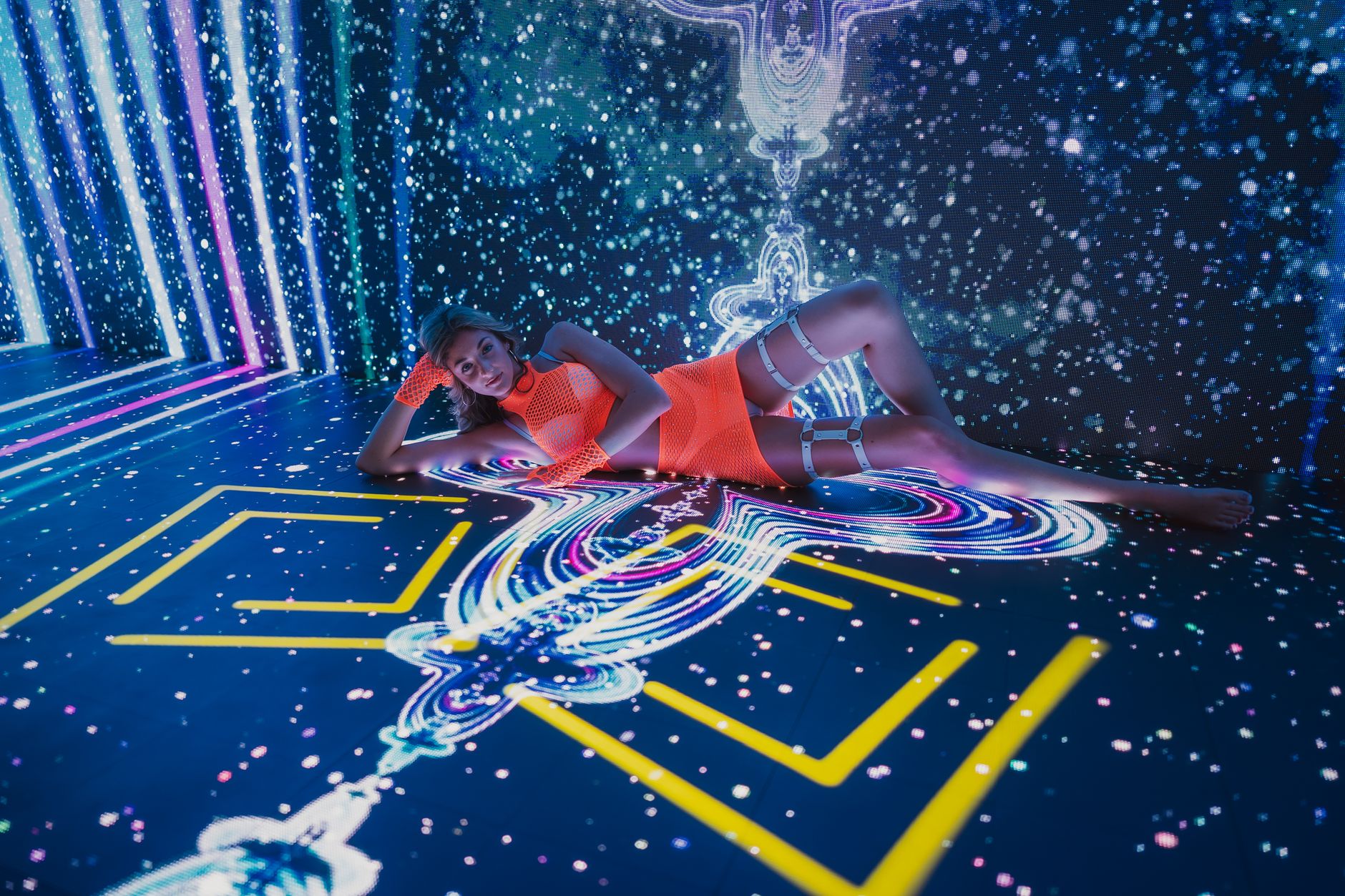
In Akram Khan’s production Kaash, the physical environment was redefined through a collaboration with sculptor Anish Kapoor [6]. The production featured a massive, glowing rectangular backdrop that created a multimedia atmosphere reflecting Hindu time cycles and the conceptual loop of creation and destruction [6]. When digital tools are used thoughtfully, they do not replace tradition; they amplify its resonance, ensuring that the spatial experience of a performance mirrors the complexity of the cultural narrative being told.
Breaking Borders: The Global Resonance of Cultural Fusion
When specific cultural heritage is fused with contemporary movement, it creates a universal language that bypasses linguistic barriers [8]. This trans-disciplinary quality—the merging of sound, visual art, and theater—allows dance to tackle complex social issues with a nuance that words often fail to capture. In Babel 7.16, Sidi Larbi Cherkaoui uses this approach to examine the intersections of nationhood and religion, turning the dancers' bodies into conduits for a conversation on global fragmentation [8].
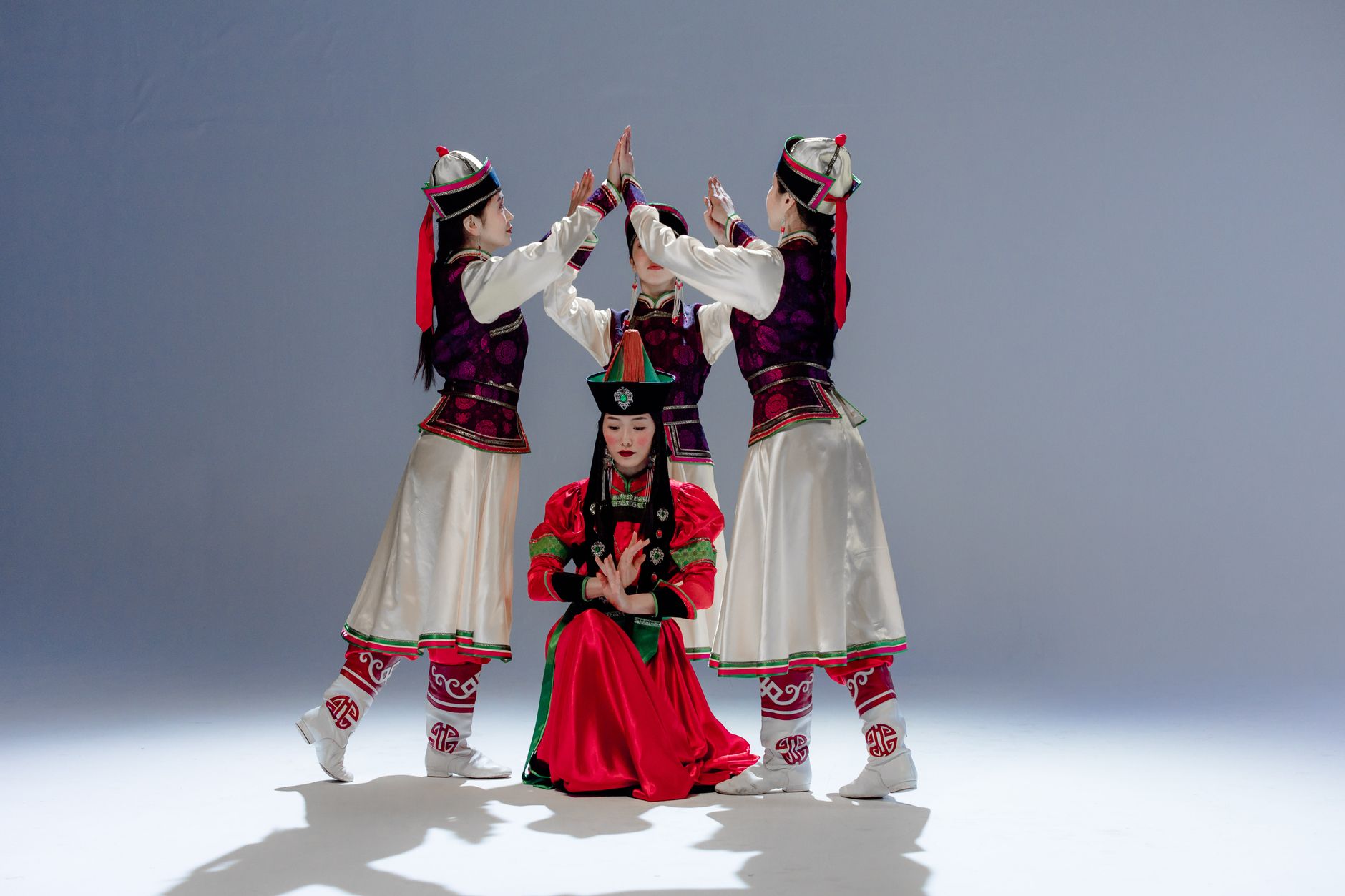
By adapting spiritual storytelling for the global stage, modern choreographers prevent cultural heritage from becoming static [8]. Instead of presenting culture as a museum piece, they keep it living and breathing. The true value of contemporary fusion lies in its ability to preserve the essence of a tradition while allowing its form to mutate, ensuring that the spiritual core of a culture remains relevant in a rapidly changing world [8].
The Preservation Tightrope: Balancing Authenticity and Evolution
However, this evolution is not without risk. The intersection of tradition and modernity creates a preservation tightrope where the threat of cultural erosion looms. Critics argue that when traditional dances are stylized for global commercial appeal, they may lose their ritualistic or spiritual significance [3, 9]. Over-stylization can sever the vital connection between a movement and the ritual from which it emerged, risking a superficial appropriation of form [9].
The resolution to this tension lies in informed innovation, which requires choreographers to ground their experimentation in rigorous study. Akram Khan, for instance, returns to deep academic and spiritual explorations of texts like the Mahabharata to ensure his contemporary adaptations are not superficial [3]. By anchoring innovation in a profound understanding of the original form, artists can evolve the dance without betraying its source [3]. This suggests that authenticity is not found in the refusal to change, but in the integrity of the evolution.
References
- Britannica, 'Contemporary dance,' Encyclopedia Britannica, 2024. View source.
- Tanztheater Wuppertal Pina Bausch, 'Pina Bausch: The Work,' Pina Bausch Official Archive, 2024. View source.
- The Guardian, 'Akram Khan: The dancer who blends Kathak and contemporary,' The Guardian, 2024. View source.
- Sidi Larbi Cherkaoui, 'The Hybrid Body,' Sidi Larbi Cherkaoui Official Site, 2024. View source.
- Alvin Ailey American Dance Theater, 'Our History and Mission,' Alvin Ailey, 2024. View source.
- Artforum, 'Akram Khan and Anish Kapoor: The Space of Kaash,' Artforum, 2024. View source.
- Sidi Larbi Cherkaoui, 'Babel 7.16: A Study of Global Fragmentation,' Sidi Larbi Cherkaoui Official Site, 2024. View source.
- International Dance Council, 'Trans-disciplinary approaches to storytelling,' UNESCO International Dance Council, 2024. View source.
- World Dance Alliance, 'Authenticity and Evolution in Traditional Dance,' WDA Journal of Research, 2024. View source.

Hey there, I’m Serena Tan. With a background in Fine Arts and over 6 years diving deep into culture and fashion columnist highlighting how art, design, and style trends reflect identity, cities, and social change., I try to bring a personal touch to every piece I write—grounded, clear, and real.