Editor's brief
This article explores the transformative philosophy of tiny house living, offering expert insights on downsizing, maximizing compact spaces through efficient design, and navigating land logistics. It emphasizes how trading excess for intentionality fosters a sustainable, clutter-free lifestyle that prioritizes meaningful experiences over material accumulation.
#Tiny House
#Minimalism
#Sustainable Living
#Home Design
Embracing the Tiny House Philosophy Transitioning into a tiny home is a profound shift in mindset that transcends the mere reduction of square footage. As an interior architect with thirteen years of experience, I have learned that this journey is not an act of subtraction, but one of deliberate addition. It is the beginning of a life where every square foot is intentional and every object is chosen with the precision of a curator. For many young adults currently navigating the suffocating cycle of "more is more," embracing minimalism allows for the mental clarity that comes from knowing exactly where everything belongs [1]. By shifting our focus from material accumulation to experiential living, we transform our home from a storage space for possessions into a backdrop for the life we truly want to lead. Mastering the Art of Downsizing The physical act of shedding possessions acts as a catharsis, clearing the way for a more intentional, design-focused lifestyle. To embark on this journey, one must move away from the frantic, all-at-once approach that often leads to burnout and instead adopt a systematic strategy. I recommend organizing your belongings into four distinct categories: keep, donate, sell, and discard. By utilizing digital tools to preserve memories and adhering to the "one-in, one-out" rule, you can prevent the inevitable creep of clutter [2]. Always remember that minimalism is a practice of patience, and celebrating small milestones is vital to maintaining the...
Embracing the Tiny House Philosophy
Transitioning into a tiny home is a profound shift in mindset that transcends the mere reduction of square footage. As an interior architect with thirteen years of experience, I have learned that this journey is not an act of subtraction, but one of deliberate addition. It is the beginning of a life where every square foot is intentional and every object is chosen with the precision of a curator. For many young adults currently navigating the suffocating cycle of "more is more," embracing minimalism allows for the mental clarity that comes from knowing exactly where everything belongs [1]. By shifting our focus from material accumulation to experiential living, we transform our home from a storage space for possessions into a backdrop for the life we truly want to lead.
Mastering the Art of Downsizing
The physical act of shedding possessions acts as a catharsis, clearing the way for a more intentional, design-focused lifestyle. To embark on this journey, one must move away from the frantic, all-at-once approach that often leads to burnout and instead adopt a systematic strategy. I recommend organizing your belongings into four distinct categories: keep, donate, sell, and discard. By utilizing digital tools to preserve memories and adhering to the "one-in, one-out" rule, you can prevent the inevitable creep of clutter [2]. Always remember that minimalism is a practice of patience, and celebrating small milestones is vital to maintaining the momentum required for this transition.
Designing for Efficiency and Comfort
In a compact environment, the walls become your greatest asset. Maximizing vertical space through floor-to-ceiling shelving and utilizing furniture with "invisible storage"—such as ottomans with lift-up lids or bed frames with integrated drawers—ensures that every square inch performs a function [3]. To avoid a cramped aesthetic, incorporate layered lighting and strategic mirror placement, which act as psychological tools to make a small footprint feel like a sprawling studio. By segmenting your living area into designated zones for work, rest, and leisure, you create a sense of order that makes a home of under 300 square feet feel both spacious and highly functional.
Navigating the Search for Land: Finding Your Roots in a Mobile World
The ground upon which your tiny home sits is the soul of your living experience, dictating your daily rhythm and community connection. Before purchasing land or securing a spot in a community, it is imperative to investigate local zoning laws, as legal frameworks regarding Accessory Dwelling Units (ADUs) can vary significantly by municipality [4]. Whether you choose the autonomy of private land or the "plug-and-play" convenience of a tiny home park, you must prioritize the logistics of utilities—water, electricity, and waste management—to ensure your sanctuary is not only beautiful but practically sustainable in the long term.
Building Your Sustainable Haven
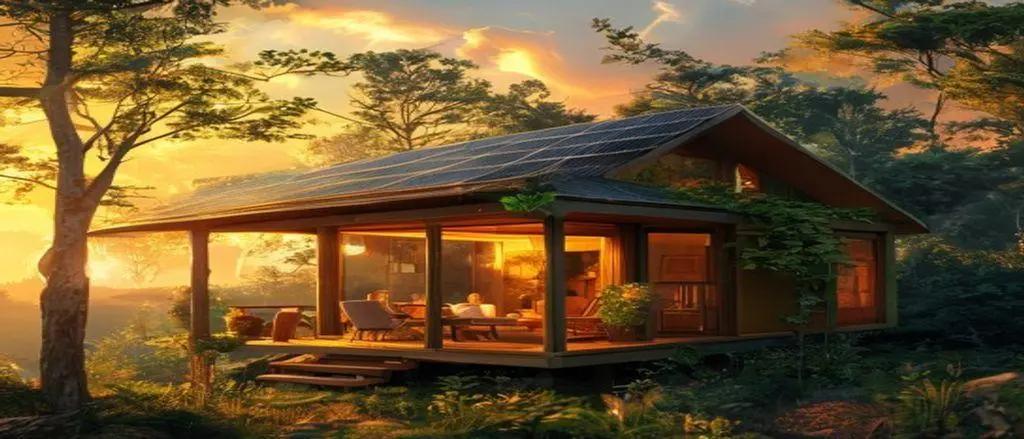
Tiny house living is an act of environmental activism, as it inherently encourages a radical reduction in energy consumption and material waste [5]. When building your haven, prioritize high-performance, non-toxic insulation and low-VOC finishes to ensure that your indoor air quality remains clean and breathable. Integrating renewable energy, such as rooftop solar panels, transforms your structure into a self-sustaining ecosystem. By consulting with professionals during the construction phase, you ensure that your design meets safety standards while maintaining the efficiency necessary to keep your ecological footprint as small as possible.
Thriving in Your New Environment
Maintaining a tiny home requires a consistent rhythm, such as a daily "closing shift" where you reset your surfaces to prevent visual clutter. Beyond your four walls, view your patio or neighborhood as an extension of your living space to avoid the feeling of confinement. As your goals evolve, conduct quarterly audits of your possessions to ensure your space remains a reflection of your current, authentic self. Ultimately, tiny living is about trade-offs; by trading excess for intentionality, you create the space to prioritize the relationships and experiences that define a truly big life.
References
- [1] The Tiny Life. "What is the Tiny House Movement?" Retrieved from https://thetinylife.com/what-is-the-tiny-house-movement/
- [2] Minimalism Life. "How to Downsize Your Life for a Smaller Home." Retrieved from https://minimalismlife.com/blog/2018/1/16/downsizing-your-life
- [3] ArchDaily. "Tiny Houses: How to Design and Build Your Own." Retrieved from https://www.archdaily.com/936496/tiny-houses-how-to-design-and-build-your-own
- [4] American Tiny House Association. "Tiny House Zoning and Legalities." Retrieved from https://americantinyhouseassociation.org/zoning-regulations/
- [5] Energy.gov. "Energy Efficiency in Small Homes." Retrieved from https://www.energy.gov/energysaver/design/energy-efficient-home-design

Hi! Elena Novak here. My background in Interior Architecture and my experiences over 13 years have made me deeply engaged with home and lifestyle writer who helps readers design comfortable, functional, and beautiful spaces on realistic budgets.. I write to share perspectives, spark ideas, and make complex topics feel human.