Editor's brief
eSports has shifted from localized arcade competition to a global professional industry. By integrating athletic training, luxury sponsorships, and high-end hardware, gaming now operates as a legitimate career path and a primary social hub for a digital-first generation.
#eSports
#Professional Gaming
#Gaming Culture
#Digital Economy
The transition from smoke-filled arcades to sold-out stadiums wasn't an accident; it was a slow-burn migration of energy. In the early days, the "arena" was a physical machine in a local hangout where stakes were purely social—a high score on a leaderboard or a handful of quarters. You could only be the best in your zip code. That limitation shattered when the culture shifted toward LAN parties, dragging heavy CRT monitors into basements to create high-pressure environments that mirrored traditional sports. This era taught the community how to organize, how to bracket, and how to build a scene around a game's specific mechanics. The Rise of the Global Arena The scale expanded when high-speed internet replaced the Ethernet cable and "ladder" systems became the standard. Suddenly, a player in Seoul could test their meta against someone in Stockholm without leaving their chair, turning gaming into a 24/7 global confrontation. In South Korea, this took a unique turn with the rise of PC Bangs, which institutionalized the LAN party and transformed StarCraft from a hobby into a national pastime with dedicated television channels. While playing became accessible, watching remained fragmented until the arrival of streaming platforms like Twitch. Streaming democratized viewership by stripping away the gatekeepers, allowing fans to watch a pro’s point-of-view in real-time and learn build orders instantly. The viewer evolved from a spectator into a student of the game. This shift turned...
The transition from smoke-filled arcades to sold-out stadiums wasn't an accident; it was a slow-burn migration of energy. In the early days, the "arena" was a physical machine in a local hangout where stakes were purely social—a high score on a leaderboard or a handful of quarters. You could only be the best in your zip code. That limitation shattered when the culture shifted toward LAN parties, dragging heavy CRT monitors into basements to create high-pressure environments that mirrored traditional sports. This era taught the community how to organize, how to bracket, and how to build a scene around a game's specific mechanics.
The Rise of the Global Arena
The scale expanded when high-speed internet replaced the Ethernet cable and "ladder" systems became the standard. Suddenly, a player in Seoul could test their meta against someone in Stockholm without leaving their chair, turning gaming into a 24/7 global confrontation. In South Korea, this took a unique turn with the rise of PC Bangs, which institutionalized the LAN party and transformed StarCraft from a hobby into a national pastime with dedicated television channels.
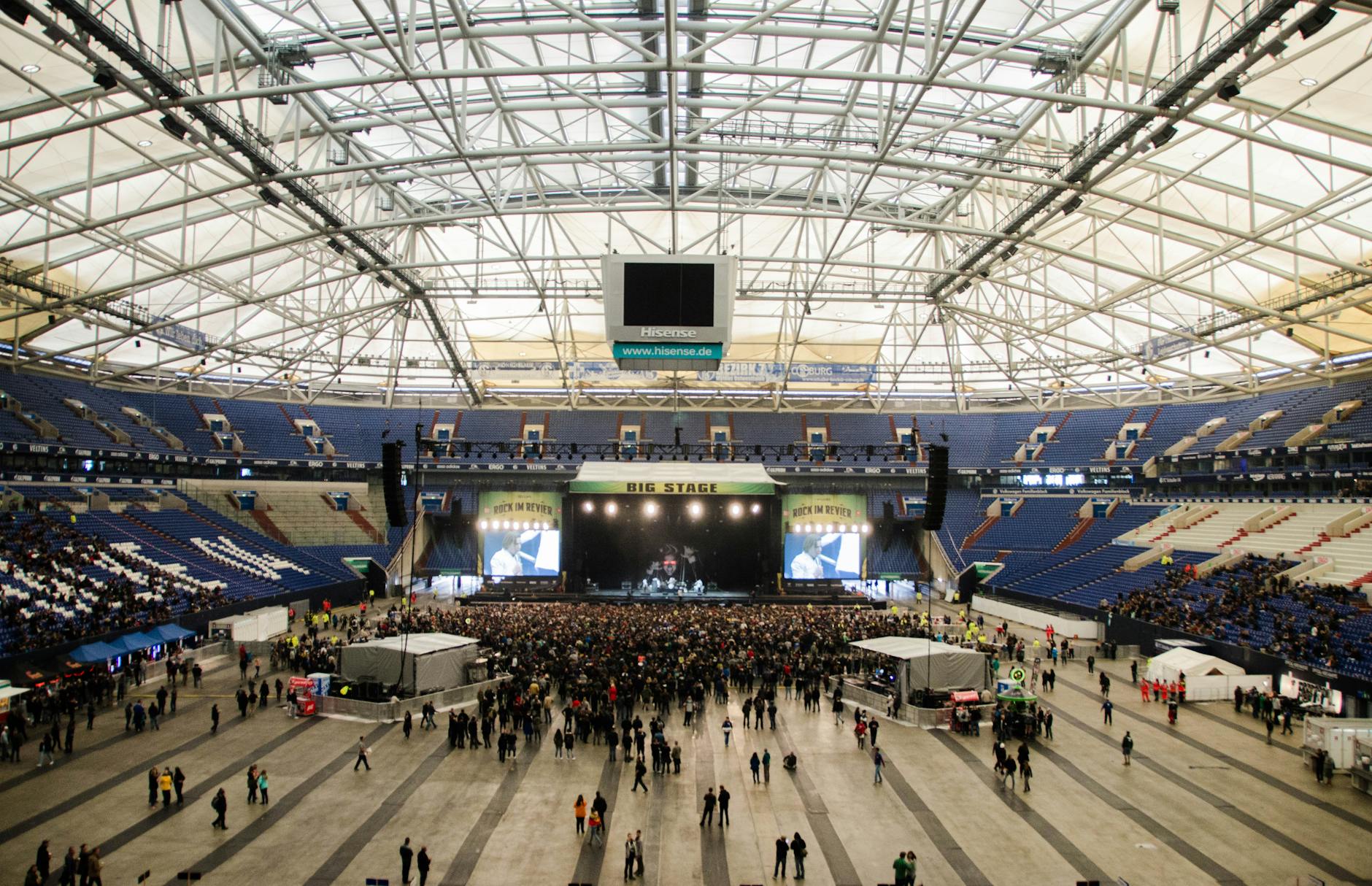
While playing became accessible, watching remained fragmented until the arrival of streaming platforms like Twitch. Streaming democratized viewership by stripping away the gatekeepers, allowing fans to watch a pro’s point-of-view in real-time and learn build orders instantly. The viewer evolved from a spectator into a student of the game. This shift turned a niche obsession into a sophisticated economic ecosystem, moving from small prize pools to multi-million dollar purses funded by crowdsourcing, as seen with Valve’s The International [1]. The physical spectacle of the Bird’s Nest in Beijing or the Staples Center packed for a League of Legends World Championship represents the completion of this cycle: gaming is no longer a solitary activity, but a roaring communal event.
The Industrialization of Skill
The image of the professional gamer as a teenager in a darkened bedroom has been replaced by the corporate reality of the high-performance center. Modern organizations like T1 and Gen.G operate as streamlined athletic franchises, managed by CEOs and General Managers who handle cap space and roster acquisitions with the precision of the NBA or the Premier League. This shift from "gaming clan" to "sports organization" focuses on building a sustainable, scalable business.
This professionalization extends to the server, where the role of the coach has undergone a metamorphosis. A head coach is now supported by performance coaches and sports psychologists who focus on "tilt" management and mental resilience. When a player collapses under pressure during a grand final, it is viewed as a failure of psychological conditioning rather than a lack of mechanical skill. This is supplemented by data analysts who scrape thousands of match histories to identify millisecond-level patterns in opponent rotations, turning the game into a series of solvable mathematical problems.

The daily routine of a professional athlete is now a scientific regimen. The "grind" is segmented into coordinated scrims and frame-by-frame VOD reviews. To sustain this intensity, teams integrate nutritionists and physiotherapists to combat carpal tunnel and chronic fatigue, recognizing that physical fitness is essential for peak reflex speeds. This is anchored by a maturing legal framework where player agencies negotiate buyouts and longevity clauses, and franchised models like the LCK provide a predictable seasonal cadence, turning a short-term gamble into a legitimate lifelong profession.
The Economic Engine of Competitive Gaming
The traditional model of selling a disc in a box is a relic. Today, the game is the platform, and the competition is the product. This has created an economy that mirrors professional sports leagues more than software publishing. Exclusive media rights deals with platforms like YouTube and Twitch have turned tournament broadcasts into high-value assets, providing organizers with stable capital to scale production to a cinematic level.

This stability has invited "non-endemic" brands—companies with no prior tie to hardware—into the space. Luxury automotive brands like BMW and fashion houses like Louis Vuitton now integrate themselves into the biggest stages, signaling that eSports is a primary demographic target for the world's most expensive brands. Digital goods have also created a direct financial bridge between fans and pros. In titles like League of Legends or CS:GO, team-branded skins and stickers act as a global digital tip jar, allowing fans to subsidize player salaries through cosmetic purchases.
This influx of liquidity, bolstered by venture capital, has evolved the "gaming house" from a shared apartment into a high-performance training center. The economy of eSports succeeded because it stopped trying to be "like" sports and instead built its own financial architecture from the ground up, validated by the premium value fans place on the physical roar of a live crowd.
The Hardware War and Digital Architecture
In high-stakes play, the margin between a legendary play and a loss is measured in milliseconds. This makes hardware as vital as reflexes. The push for next-gen GPUs and CPUs has shifted the focus from visual fidelity to absolute stability and high refresh rates. While casual players are content with 60Hz, professional circuits demand 240Hz or 360Hz monitors to reduce motion blur and input lag, allowing players to track targets with surgical precision.
This obsession with speed extends to the invisible architecture of the internet. Low-latency networking and optimized "tick rates"—the frequency with which a server updates the game state—are essential to eliminate "peeker's advantage." When developers optimize server clusters, they are essentially building a digital court where the laws of physics are applied consistently to every participant.
The physical interface has also evolved. Mechanical keyboards with optical switches and ultra-lightweight mice with high-DPI sensors are designed to vanish, removing the friction between a player's intent and the action on screen. Simultaneously, developers now integrate dedicated spectator modes that function like professional television production suites, providing the narrative clarity needed for millions to understand a complex team fight in real-time. The barrier to this ecosystem is now crumbling thanks to cloud gaming, which decouples high-end performance from hardware ownership, ensuring that skill—not bank account size—defines the next champion.
Cultural Displacement and the Digital Third Place
The "third place"—the essential social space between home and work—has migrated from the physical mall into the digital lobby. For many young adults, a Discord server or a game queue is the primary venue for maintaining friendships. This shift has moved the social focus from geographic proximity to shared interest, rebuilding social hierarchies around competence and reliability rather than traditional status.

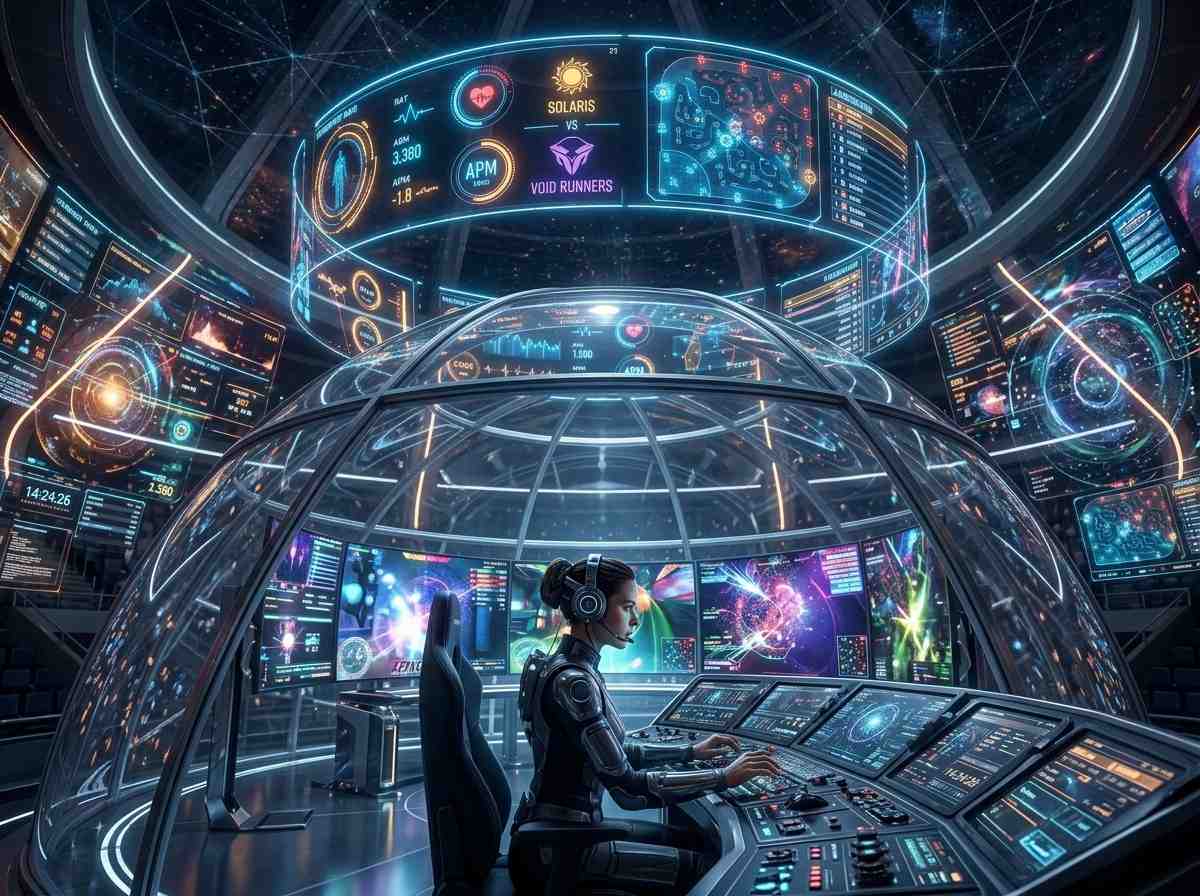
This has fundamentally altered the perception of gaming. The trope of the basement-dwelling gamer has been replaced by the image of the disciplined athlete. Professional gaming is now a prestigious career path, with the world recognizing that maintaining high Actions Per Minute (APM) or executing frame-perfect combos requires cognitive load and dexterity that rivals any traditional sport.
These competitions also act as diplomatic bridges. At events like the LoL World Championship, the shared language of game mechanics transcends national borders, creating a form of internationalism where passion for a patch update creates more immediate cultural cohesion than traditional diplomacy. This influence has leaked into mainstream aesthetics, where the utilitarian lines of techwear and cyberpunk palettes have influenced streetwear, and collaborations between luxury houses and game developers signal that gaming culture is now the dominant aesthetic of the modern era.
The Next Frontier: Mobile, Wellness, and Legitimacy
The International Olympic Committee’s foray into the Olympic Esports Series proves the debate over whether gaming is a "real sport" is over [2]. This seal of approval shifts the conversation from seeking legitimacy to defining global standards of professional play.

While prestige moves upward, the player base is expanding outward via mobile gaming. In Southeast Asia and Brazil, smartphones have decentralized power hubs, moving the focus away from PC cafes in Seoul or Los Angeles. Titles like Free Fire and Mobile Legends: Bang Bang have turned the smartphone into a democratic tool for entering the professional pipeline.
However, this intensity has a breaking point. The industry is currently grappling with a burnout crisis caused by unsustainable "grind culture." A necessary pivot toward holistic wellness—where sports psychologists and physical therapists are as essential as the head coach—is required to extend player career spans. Sustainable growth requires treating the player as a human being rather than a disposable asset.
Looking forward, the spectator experience is the next frontier. Augmented Reality (AR) has the potential to project the game state—maps, cooldowns, and tactical overlays—directly into the physical arena or a fan's living room. This would transform a match into a spatial experience, bridging the gap between digital action and the physical crowd. As these technologies merge, the distinction between physical and digital athletics will continue to fade.
Conclusion
eSports has evolved from a localized hobby into a global powerhouse by mirroring the professionalization of traditional sports while leveraging the unique advantages of digital connectivity. By institutionalizing training, diversifying revenue streams through digital goods, and optimizing the hardware of competition, gaming has created a new paradigm for entertainment. The "gamer" label has evolved from a subculture into a professional designation. Success in this environment now requires a balance of raw mechanical skill, rigorous psychological discipline, and adaptation to a rapidly diversifying platform ecosystem, from the PC to the smartphone.
References
- Valve Corporation, "The International Prize Pool," official tournament data.
- International Olympic Committee, "Olympic Esports Series," official program announcement.

Greetings! Daniel Kim here. I’ve spent 4 years navigating the world of gaming and tech columnist who tracks esports, game design trends, and the communities that form around them., and my roots in South Korea and training in Game Design continue to shape how I tell stories and break down ideas.