Editor's brief
Live performances are evolving from static shows into immersive ecosystems. By blending spatial audio, haptic technology, and generative visuals, artists erase the boundary between stage and crowd, using digital architecture to amplify raw human emotion and connection.
#Live Music
#Immersive Tech
#Spatial Audio
#Concert Production
The moment the house lights drop and ten thousand wristbands ignite in a synchronized wave of neon, the boundary between performer and spectator dissolves. For decades, the concert experience was a static painting: the audience stood on one side and the art happened on the other, separated by a physical and psychological divide. Now, the architecture of live performance is shifting. We are moving away from the era of the "pedestal" and toward a living, electric ecosystem where the audience is an active component of the production. Breaking the Fourth Wall: Spatial Architecture The traditional stage is becoming a relic. To erase the hierarchy of the "front row," artists are adopting 360-degree designs that place the performer in the center of the room, changing the energy loop from a presentation into a shared ritual. This spatial dissolution extends to the venue itself; projection mapping has turned concrete and steel into digital skins. The Las Vegas Sphere is the most aggressive example of this, using a massive wrap-around LED environment to consume the viewer and replace the physical room with a simulated reality [1]. This visual expansion now reaches into the sky. Drone swarms are replacing static screens, projecting floating sculptures and light geometries that move in real-time to the BPM of the music. Even the "presence" of the artist is being redefined through volumetric capture. The ABBA Voyage show in London uses "ABBAtars" to create a visceral, three-dimensional br...
The moment the house lights drop and ten thousand wristbands ignite in a synchronized wave of neon, the boundary between performer and spectator dissolves. For decades, the concert experience was a static painting: the audience stood on one side and the art happened on the other, separated by a physical and psychological divide. Now, the architecture of live performance is shifting. We are moving away from the era of the "pedestal" and toward a living, electric ecosystem where the audience is an active component of the production.
Breaking the Fourth Wall: Spatial Architecture
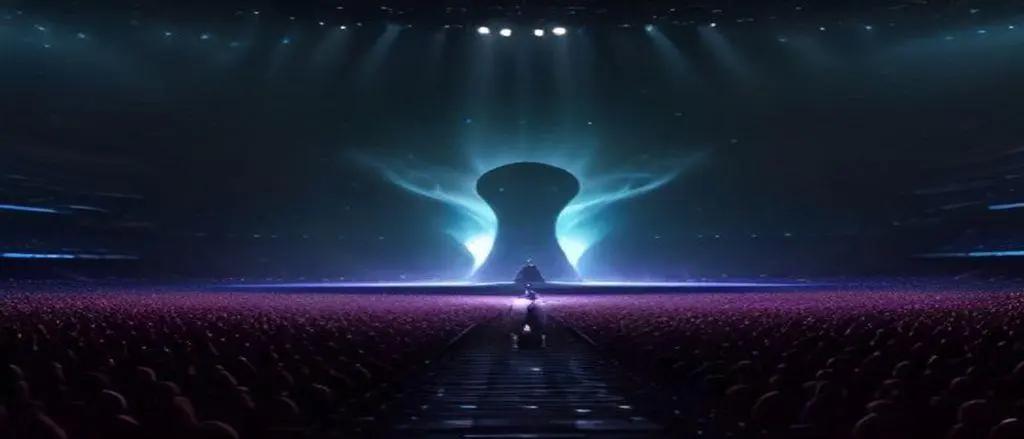
The traditional stage is becoming a relic. To erase the hierarchy of the "front row," artists are adopting 360-degree designs that place the performer in the center of the room, changing the energy loop from a presentation into a shared ritual. This spatial dissolution extends to the venue itself; projection mapping has turned concrete and steel into digital skins. The Las Vegas Sphere is the most aggressive example of this, using a massive wrap-around LED environment to consume the viewer and replace the physical room with a simulated reality [1].

This visual expansion now reaches into the sky. Drone swarms are replacing static screens, projecting floating sculptures and light geometries that move in real-time to the BPM of the music. Even the "presence" of the artist is being redefined through volumetric capture. The ABBA Voyage show in London uses "ABBAtars" to create a visceral, three-dimensional bridge between nostalgia and future-tech, proving that a performance can feel human even when the biological artist isn't physically in the room [2].
The Physics of Feeling: Sonic Evolution
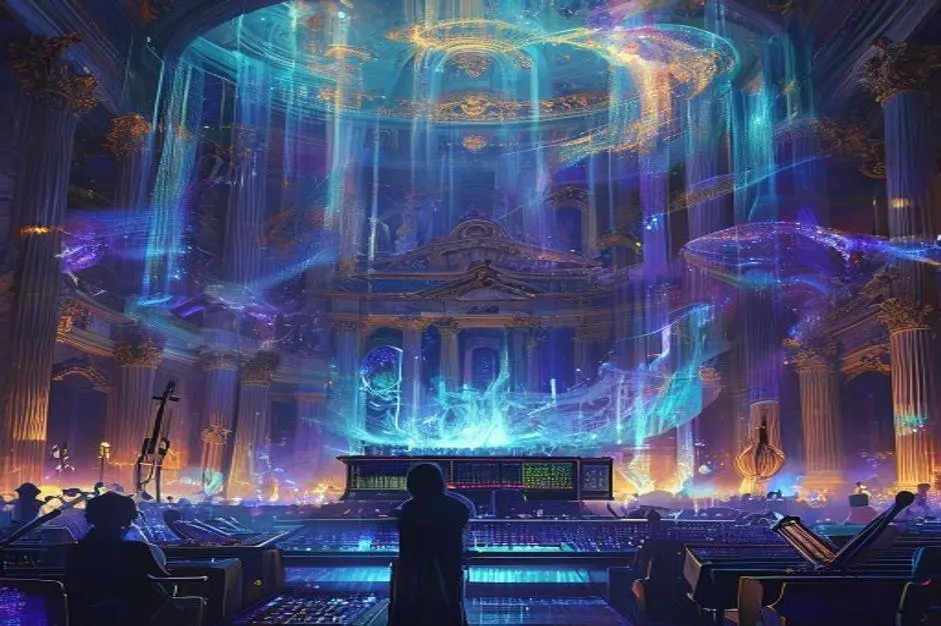
To match this visual depth, audio has evolved beyond the left-right stereo split. The industry is moving toward spatial audio and object-based mixing, utilizing systems like L-Acoustics L-ISA. Unlike traditional setups where sound is pinned to specific speaker clusters, spatial audio allows the sonic image to follow the performer in real-time [3], removing the "sonic blur" of massive arenas and ensuring every seat feels like the sweet spot.

The most profound impact of live music is somatic. Sound is a pressure wave; when a sub-bass frequency hits around 40Hz at high volume, it vibrates the sternum and diaphragm, triggering a primal response that bypasses the analytical brain. This physical impact is being refined through haptic technology. Wearable devices, such as those from Woojer or Subpac, translate auditory frequencies into tactile vibrations felt directly in the chest and spine. This is a vital step toward inclusive accessibility, allowing the d/Deaf and hard-of-hearing community to feel the pulse of the music [4].
Digital Agency and Interactive Narratives
Interaction now begins long before the first note. Venues are being reimagined as interactive playgrounds, using augmented reality (AR) markers to gamify the pre-show wait. Fans hunt for hidden clues or "easter egg" snippets of tracks, turning a crowd of strangers into a coordinated community. Once the show starts, rigid setlists are giving way to "choose your own adventure" architectures, where real-time mobile polls allow the crowd to vote on the final song or a specific B-side.

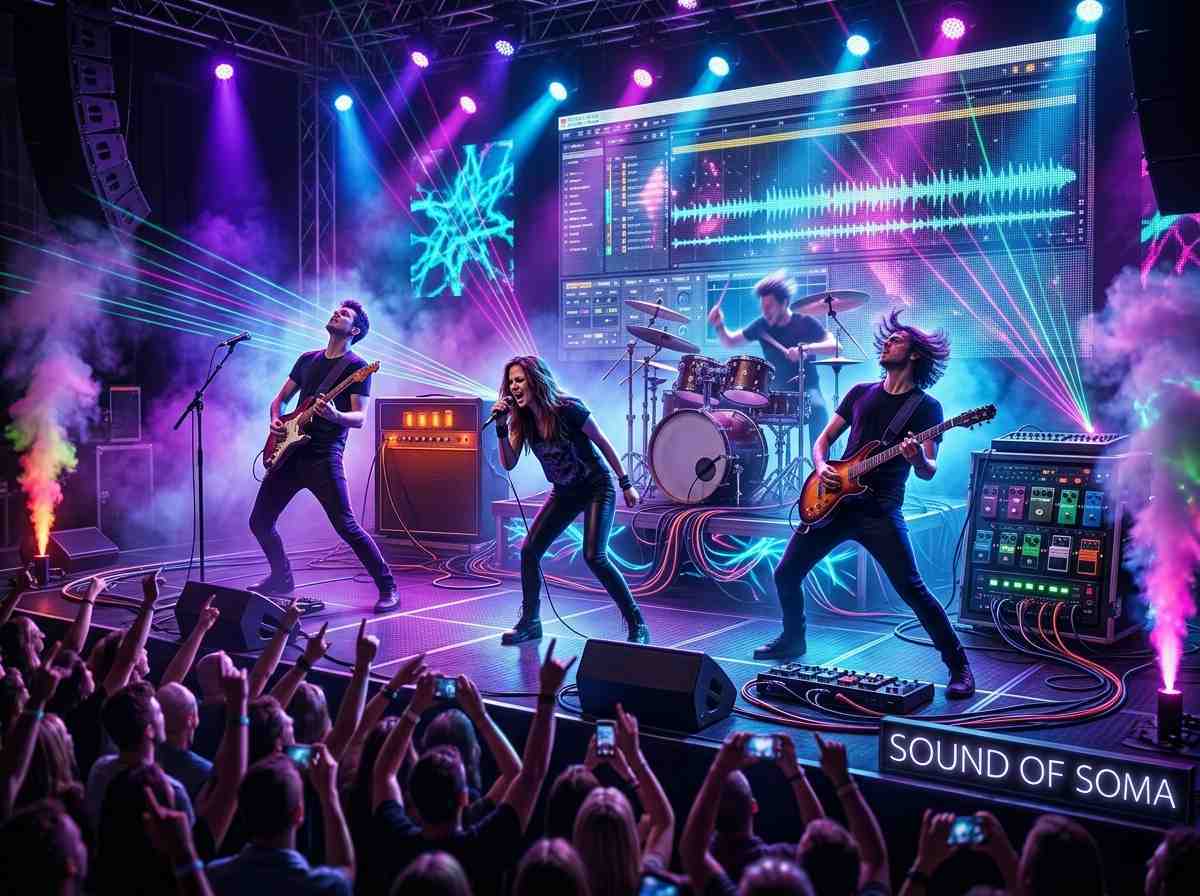
Behind the scenes, the lighting director is shifting from a programmer to a curator. Using software like TouchDesigner and generative AI, visuals are no longer pre-rendered loops but reactive organisms. These systems analyze audio transients and frequency shifts in real-time; if a guitarist extends a solo or a drummer pushes the tempo, the lighting responds instantly. This creates a feedback loop where the artist is playing the room as much as they are playing their instrument.
Beyond the Arena: New Frontiers of Access
There is a growing pull toward spaces that feel discovered rather than designed. Guerrilla-style pop-ups in abandoned warehouses or brutalist industrial shells use the architecture as an instrument, where harsh concrete surfaces create a raw, aggressive reverb that cannot be replicated in a sterilized hall. Other productions are migrating to forests or canyons, letting natural topography dictate the acoustic experience and transforming the concert into a site-specific installation.
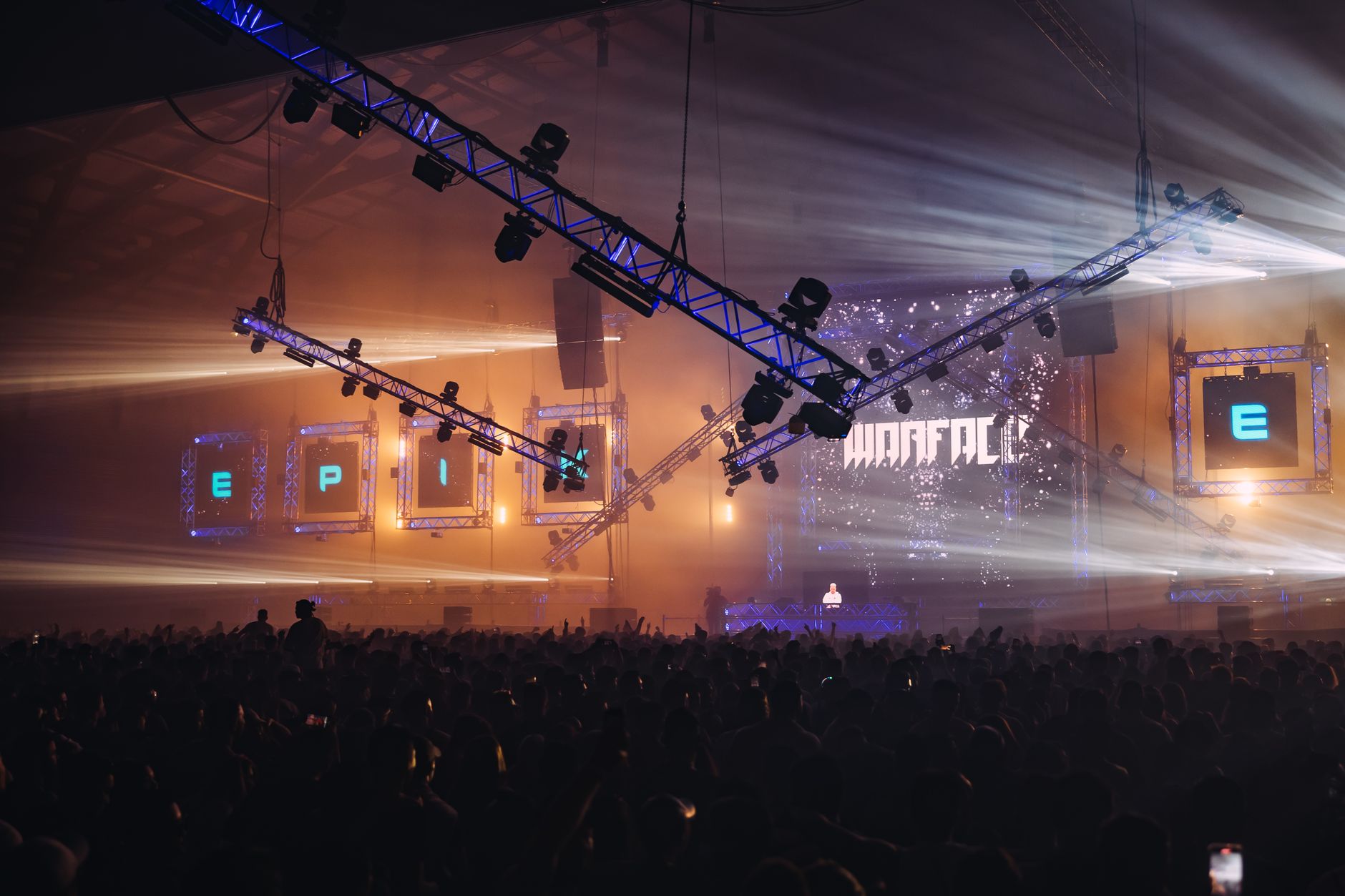
Simultaneously, the "venue" is expanding globally. Hybrid festivals now treat streaming audiences as active participants. A fan in Cairo can influence the lighting or setlist of a show in London via real-time digital integration. This connectivity extends to the post-show experience through digital collectibles, such as Proof of Attendance Protocols (POAPs), which provide a cryptographically secure token of presence [5]. These digital artifacts ensure the connection lasts long after the amplifiers are powered down, often granting access to exclusive stems or future early-bird tickets.
The Human Friction: Soul in the Machine
Despite the lean toward surgical digital precision, there is a persistent hunger for the unpredictable. In the studio, the impulse is to remove imperfections, but in a live setting, those flaws are where the humanity lives. A slight crack in a vocal or an unexpected guitar feedback loop creates a moment of vulnerability that a quantized file cannot replicate. High-tech rigs are at their best when they frame this raw energy rather than replacing it.

The most powerful tool in any production remains the strategic use of silence. The sudden vacuum of sound right before a heavy drop creates a breathless tension, a collective moment where thousands of people hold their breath in unison. This shared relief is the soul of the experience. The risk for the next generation of producers is that the spectacle might swallow the song. The goal must be to use holographic skins and haptic suits to amplify vulnerability, ensuring technology serves the emotional arc of the music.
Conclusion
The modern concert is evolving from a one-way broadcast into a multi-sensory dialogue. From the spatial precision of L-ISA to the immersive scale of the Sphere and the inclusive power of haptic vests, technology is breaking down the barriers between creator and consumer. However, the core of the live experience remains unchanged: the desire for raw, human connection.

For the fan and the producer alike, technology should be a narrative amplifier, not the main event. To create a truly unforgettable experience, the focus must remain on the "friction"—the unplanned moments, the heavy silence, and the physical vibrations that remind us we are alive. The future of live music isn't about replacing the human element with a digital one; it is about building a digital architecture that makes our humanity feel even more electric.
References
- Sphere Entertainment Co., "The Sphere Technical Specifications," 2023.
- Industrial Light & Magic, "The Making of ABBA Voyage: Volumetric Capture and Digital Avatars," 2022.
- L-Acoustics, "L-ISA Immersive Hyperreal Sound Technology," official product documentation.
- Woojer, "Haptic Technology and Auditory Accessibility in Live Performance," 2024.
- POAP, "Proof of Attendance Protocol: Digital Collectibles for Event Presence," 2022.

Hello, I'm Ahmed Saleh. My journey began with Music Production, but over the last 9 years, my passion for music and entertainment writer breaking down songs, production techniques, and how soundtracks shape emotion. has shaped my voice as a writer—reflective, grounded, and always curious.