
Editor's brief
Solar energy is evolving from rooftop additions to integrated urban infrastructure. New perovskite materials and building-integrated photovoltaics turn cities into power plants, while smart grids and circular design ensure the transition is efficient, sustainable, and ethically sourced.
#Solar Energy
#Perovskites
#Smart Cities
#Renewable Tech
For decades, the image of renewable energy was defined by rigid, blue crystalline silicon panels bolted onto rooftops. While these early photovoltaics proved that sunlight could be harvested at scale, they were treated as external additions—afterthoughts rather than fundamental components of infrastructure. We are now moving past this additive phase. The transition is shifting from simply "adding solar" to "building solar," where the materials of our cities generate the power they consume. This evolution is an engineering milestone and a requirement to decouple global economic growth from carbon emissions in a timeframe that respects the urgency of the climate crisis. Breaking the Physics Ceiling: The Perovskite Leap The solar industry has long operated under the Shockley-Queisser limit, a theoretical maximum stating that a single-junction silicon cell can convert only about 33% of sunlight into electricity, with the remainder lost primarily as heat [1]. For years, the industry fought for marginal gains, squeezing fractions of a percentage point out of silicon. To achieve a true leap in energy density, a shift in physics was required, not just incremental improvements in manufacturing. Perovskite crystals are providing that breakthrough. Unlike the rigid structure of silicon, perovskites are synthetic materials with a flexible atomic structure that can be "tuned." By adjusting their chemical composition, researchers can alter the bandgap—the specific energy required to knock...
For decades, the image of renewable energy was defined by rigid, blue crystalline silicon panels bolted onto rooftops. While these early photovoltaics proved that sunlight could be harvested at scale, they were treated as external additions—afterthoughts rather than fundamental components of infrastructure. We are now moving past this additive phase. The transition is shifting from simply "adding solar" to "building solar," where the materials of our cities generate the power they consume. This evolution is an engineering milestone and a requirement to decouple global economic growth from carbon emissions in a timeframe that respects the urgency of the climate crisis.
Breaking the Physics Ceiling: The Perovskite Leap
The solar industry has long operated under the Shockley-Queisser limit, a theoretical maximum stating that a single-junction silicon cell can convert only about 33% of sunlight into electricity, with the remainder lost primarily as heat [1]. For years, the industry fought for marginal gains, squeezing fractions of a percentage point out of silicon. To achieve a true leap in energy density, a shift in physics was required, not just incremental improvements in manufacturing.
Perovskite crystals are providing that breakthrough. Unlike the rigid structure of silicon, perovskites are synthetic materials with a flexible atomic structure that can be "tuned." By adjusting their chemical composition, researchers can alter the bandgap—the specific energy required to knock an electron loose—effectively choosing which part of the light spectrum the cell absorbs.

Tandem cells represent the most potent application of this technology. By layering perovskites on top of silicon, engineers create a division of labor: the perovskite layer captures high-energy blue light photons that silicon typically wastes as heat, while the silicon layer underneath catches lower-energy red and infrared photons. This configuration allows cells to push efficiency well past the 30% mark, reducing the physical footprint required to generate a megawatt of power [2]. This efficiency is an environmental imperative; higher conversion rates mean less glass, aluminum, and high-purity silicon are needed, reducing the carbon footprint associated with quartz mining and extreme-temperature smelting.
The Solar City: Integrated Infrastructure
As hardware becomes more efficient, it is also becoming invisible. The shift toward thin-film technology—using materials like cadmium telluride or copper indium gallium selenide—has replaced thick wafers with layers only a few micrometers thick. This flexibility enables Building Integrated Photovoltaics (BIPV), where the energy-generating component is the building material itself.
This is manifesting in solar glass and photovoltaic facades that turn skyscrapers into vertical power plants. By utilizing transparent conductive oxides, engineers have developed coatings that allow visible light to pass through while capturing the ultraviolet and infrared spectrums. This turns every window in a high-rise into a silent energy harvester, reducing reliance on carbon-heavy distant grids.

This approach extends to the public commons. From smart benches providing community Wi-Fi to the integration of photovoltaic cells into road surfaces, the goal is to stop using urban land solely for transport and start using it for production. Some modern buildings now employ adaptive solar skins—kinetic facades that tilt in real-time to track the sun’s trajectory, mimicking biological organisms to optimize photon flux. When energy generation is woven into glass and pavement, sustainable technology becomes a seamless layer of the urban experience.
Solving the Grid Paradox
A significant irony of the solar transition is "curtailment"—the wasting of electricity when solar production peaks while human demand is low. Current grids were built as one-way streets for steady combustion; they are not designed for the volatility of the sun. To solve this, the focus must shift from generation to storage and intelligence.
While lithium-ion batteries provided a starting point, solid-state batteries are the necessary successor. By replacing liquid electrolytes with solid ceramic or polymer materials, these batteries offer higher energy density and eliminate the risk of thermal runaway, allowing for safer, massive-scale storage of midday energy for use during winter freezes or nighttime peaks [3].

Hardware must be paired with a "mesh" approach to grid management. Smart grids, driven by machine learning, can predict weather shifts and automatically signal industrial loads to shift energy-intensive processes or trigger the discharge of community batteries. This is amplified by vehicle-to-grid (V2G) technology. Since most electric vehicles remain parked 90% of the time, bidirectional charging transforms them into mobile battery packs that feed power back into the home or grid during peak hours. This shifts the inhabitant from a passive consumer to a "prosumer," turning private assets into a collective, distributed power plant.
The Circular Imperative and Ethical Sourcing
A solar panel is a miracle of physics, but it presents a waste management challenge at the end of its thirty-year lifespan. While the energy payback time—the period it takes for a panel to generate the energy used to manufacture it—is typically only one to four years, the scale of deployment risks a future waste crisis.
The industry is pivoting toward a circular economy through "design for disassembly." By avoiding permanent resins that glue panels together, manufacturers can recover high-value silver and high-purity silicon, reducing the need for destructive primary mining. Simultaneously, there is a push to replace toxic elements, such as cadmium, with bio-based materials and non-toxic solvents to protect local aquifers during fabrication.
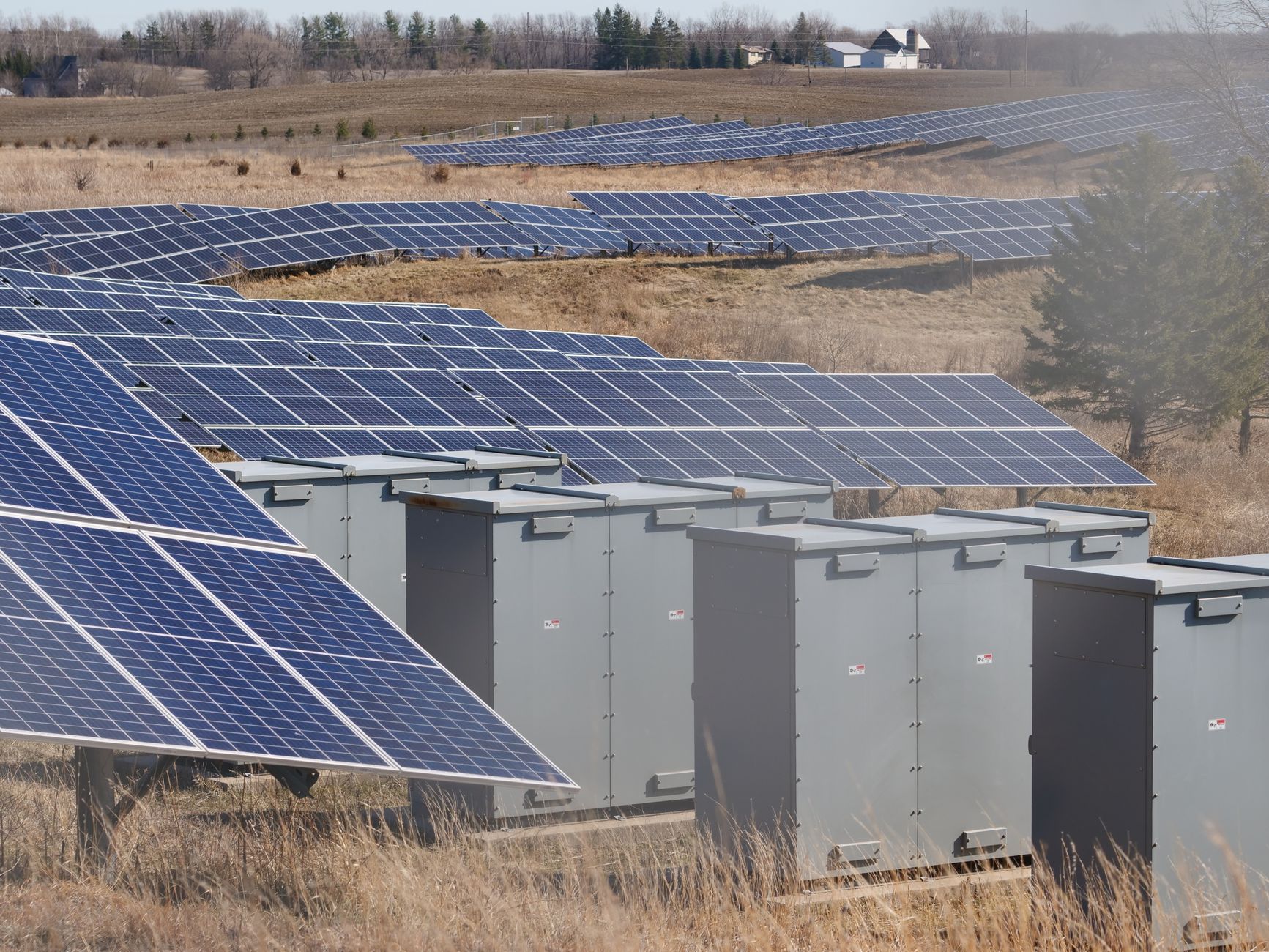
True sustainability also requires a lens of social justice. The minerals powering the green transition are often extracted in regions with weak labor protections. A transition that cleans the air in the Global North while degrading the soil and dignity of workers in the Global South is a failure of ethics. Rigorous traceability standards are essential to ensure the transition is just. To prevent habitat fragmentation, the adoption of agrivoltaics—installing panels above crops or grazing land—allows for a synergy that preserves biodiversity while optimizing land productivity.
Economic Sovereignty and the Global Shift
The argument for solar has moved from a moral plea to a mathematical certainty. The Levelized Cost of Energy (LCOE) now shows that in most regions, building new solar capacity is cheaper than continuing to operate existing coal plants [4]. This financial inversion has turned the green transition into a fiscal imperative.
This shift is redrawing the map of geopolitical power. Nations that historically lacked fossil fuel reserves have been trapped in energy dependence. By harnessing solar irradiance, these countries are achieving energy sovereignty. In India, the scale of installations like the Bhadla Solar Park demonstrates that solar can provide the heavy-duty baseload power required for industrialization, reducing the need to spend foreign currency on imported LNG or coal.

However, the speed of this transition depends on whether solar technology is treated as a proprietary product or a global public good. The climate crisis does not allow for twenty-year patent protections to bottleneck deployment in developing nations. Open-sourcing efficiency breakthroughs is the only way to ensure the "leapfrog effect," where the Global South skips the fossil fuel stage entirely to build a resilient, decentralized infrastructure.
Conclusion
The evolution of photovoltaics—from bulky silicon wafers to tunable perovskites and integrated urban skins—represents a fundamental reimagining of how human civilization interacts with energy. By decentralizing production and integrating capture into our architecture, we remove the fragility of centralized power and build a world capable of weathering climatic volatility.

Practical Takeaway: To accelerate this transition, support policies that prioritize distributed energy resources (DERs) and grid modernization over centralized fossil fuel subsidies. For those in urban environments, advocate for BIPV standards in new construction and explore community solar programs to transition from a passive energy consumer to an active prosumer.
References
- S. M. Shockley and W. Queisser, "Detailed Balance Limit of Efficiency of p-n Junction Solar Cells," Journal of Applied Physics, 1961.
- Oxford PV, "Perovskite-on-Silicon Tandem Solar Cells," Official Technical Report, 2023.
- International Energy Agency (IEA), "Energy Storage Technology Roadmap," 2023.
- International Renewable Energy Agency (IRENA), "Renewable Power Generation Costs in 2022," 2023.

Hello, I'm Noah Patel. Growing up in India shaped much of how I see the world, and after 12 years working around environment and science reporter covering climate risk, conservation, and solutions for more sustainable living., I’ve learned to write in a way that’s both thoughtful and honest.